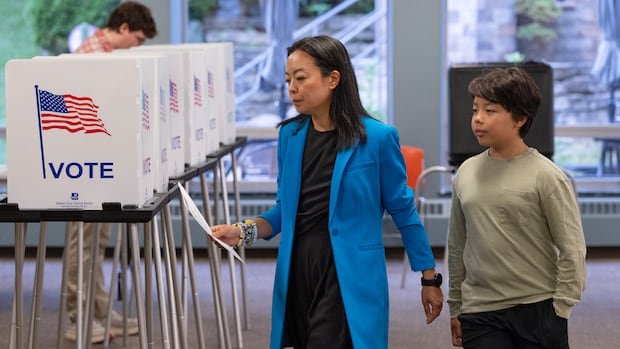
As America approaches the midterm elections, a challenging primary season has deepened the divide between the progressive and centrist factions within the Democratic Party. The battle for Congress in November and the future presidential race in 2028 hang in the balance.
Centrists advocate for candidates promoting moderate and practical policies to win seats from Republican control. Progressives, on the other hand, argue that uninspiring establishment contenders will not energize a coalition of young voters, working-class individuals, and a diverse electorate crucial for the party’s success.
Hans Noel, an associate professor of Government at Georgetown University, expressed uncertainty about which faction holds greater appeal. He highlighted that while progressive candidates may alienate some traditional Democratic voters, they could attract new voters, including those previously disengaged.
Factors like personal likability further complicate the prediction process, making it challenging to gauge the overall strength of each faction. Primary wins and losses have delivered mixed results for both sides, offering valuable lessons for the future.
In a recent primary in Wisconsin, progressives faced a setback as voters narrowly selected moderate David Crowley over self-described Democratic Socialist Francesca Hong for the governor’s nomination. Hong’s campaign was marred by past controversial statements, leading to a lack of endorsement from prominent progressive figures like Rep. Alexandria Ocasio-Cortez and Sen. Bernie Sanders.
Similar scenarios played out in other states like Washington and Missouri, where moderates successfully fended off progressive challengers. However, progressive victories, such as Abdul El-Sayed’s win in Michigan, have showcased the appeal of their platform, emphasizing issues like universal healthcare and campaign finance reform.
The discontent among young voters towards the party leadership and the call for more combative stances have fueled the rise of progressive candidates like El-Sayed. While some question the electability of progressives in key battleground states, others believe that their passion needs to be balanced with broader appeal to secure victories in general elections.
As the Democratic Party navigates these ideological debates, the upcoming midterms will serve as a litmus test for the effectiveness of different strategies. With President Trump’s declining popularity and controversial policies, Democrats, whether progressive or centrist, have an opportunity to capitalize on the political landscape, but the outcome remains uncertain.