The dispute concerning the future of the Kennedy Center intensified on Thursday as allies of U.S. President Donald Trump on the board initiated new actions to honor him through physical alterations to the renowned performing arts venue that might contravene a court ruling.
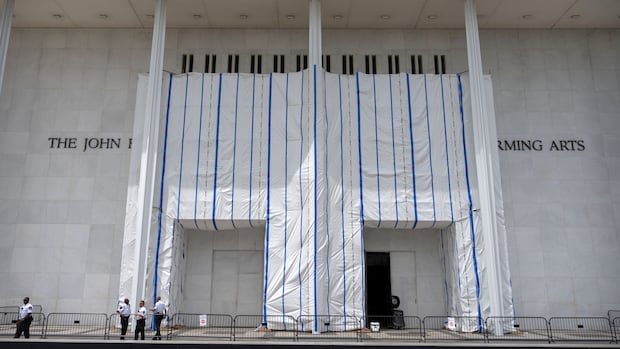
In a lengthy virtual meeting, the board decided to incorporate Trump’s name onto the building’s façade, changing it to “The John F. Kennedy Center for the Performing Arts Restored and Renovated By President Donald J. Trump.” Additionally, they proposed naming the plaza in front of the building after Trump and closing most of the venue for two years to accommodate significant renovations.
Representative Joyce Beatty, an Ohio Democrat and an ex-officio board member, along with her legal team, characterized these modifications as a significant challenge to U.S. District Judge Christopher Cooper. Cooper had previously ruled in May that the letters displaying Trump’s name on the building were unlawfully added and ordered their removal, a decision that the administration failed to reverse in court. He also halted the planned two-year closure, criticizing it as poorly informed and predetermined.
Beatty condemned the recent developments as an attempt to circumvent the court’s decision and violate Congressional statutes. She vowed to continue advocating for the preservation of the national monument.
The Kennedy Center representatives did not immediately respond to requests for comments on the matter.
The board meeting mainly revolved around discussions on the necessary closures for renovations essential for enhancing safety. In response to the judge’s concerns about the previous vote, the institution’s leaders presented three options to the board, including complete closure, partial closure with limited programming access, and phased closures targeting critical infrastructure needs while maintaining programming schedules.
Ultimately, the board opted to close the building for two years while exploring the possibility of hosting some programming in the outdoor space known as the Reach. This decision, along with the efforts to honor Trump, may raise questions about the thorough consideration of all available options by the board.
Trump’s influence on the Kennedy Center has become emblematic of his authority during his second term. Following his re-election in January 2025, Trump swiftly removed the center’s leadership and appointed a board of trustees, with himself as the chairman. While his name was briefly displayed on the building before being taken down in compliance with Cooper’s order, Trump’s actions at the Kennedy Center form part of a broader initiative to reshape Washington, D.C.’s physical landscape, including contentious projects like the White House East Wing demolition and construction of a ballroom.
The Kennedy Center leadership has emphasized the urgent need for repairs and updates within the institution. Executive Director Matt Floca showcased severe water damage and aging equipment during a tour of the facility, underscoring the necessity for comprehensive renovations rather than piecemeal repairs.
As legal battles persist, the Kennedy Center’s significance as a cultural hub open to all Americans for artistic experiences remains a focal point, according to Trump-appointed trustee Pamella Roland DeVos. The responsibilities associated with the institution are taken seriously by the board, she affirmed.