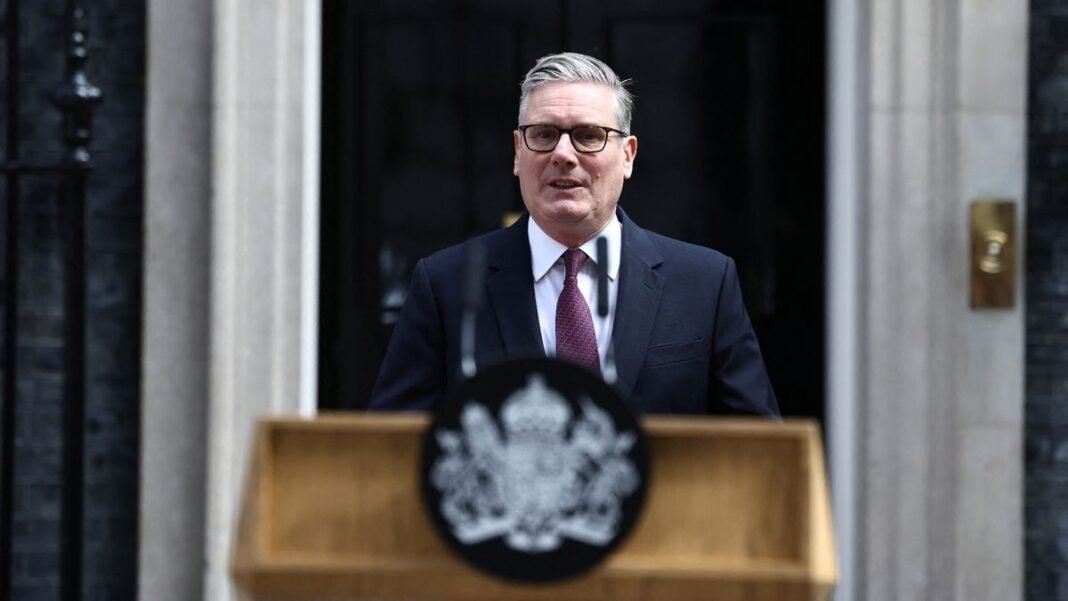
The British pound reversed its earlier decline, and government borrowing costs calmed down following the aftermath of Keir Starmer’s resignation. Financial markets reacted relatively calmly to the news, with investors considering the potential of Andy Burnham taking over as the new Prime Minister.
In morning trading, the pound was slightly up at $1.324 after initially being lower. Against the euro, it rose to 1.154. The pound had already weakened by about 3% since February due to uncertainties surrounding Sir Keir’s leadership within the Labour party.
After Sir Keir’s emotional speech, the yield on 10-year government gilts briefly increased to 4.85% but then dropped to 4.81% as former health secretary Wes Streeting endorsed Mr. Burnham. This endorsement reduced the likelihood of a prolonged leadership contest. The 30-year gilt yield remained relatively stable.
Government gilts not only impact borrowing costs but also influence fixed-rate mortgages. When UK government bond yields rise, banks face higher wholesale funding and hedging expenses. The bond market will be closely watched in the upcoming period due to the UK’s high borrowing costs and significant national debt.
Market analyst Chris Beauchamp noted the importance of potential changes under Burnham’s leadership and the need for a dynamic approach to address the UK’s financial challenges. The stock market showed a mild reaction, with the FTSE 100 slightly down, reflecting the anticipation of Sir Keir’s resignation.
As Sir Keir outlined his departure timeline, paving the way for Burnham to potentially become the seventh UK leader post-Brexit, market experts are monitoring how Burnham’s fiscal policies and leadership style will impact the economy and financial markets.
Analyst Jim Reid highlighted the challenges faced by UK Prime Ministers in the past decade, particularly in a post-Brexit landscape, emphasizing the need for economic growth and debt management to stabilize leadership transitions.
The stock market’s response remained moderate, with the FTSE 100 showing positive performance over the year. Sterling experienced a slight decline against the US dollar and the euro, prompting economists to focus on Burnham’s fiscal strategy and choice of Chancellor for future economic policies.