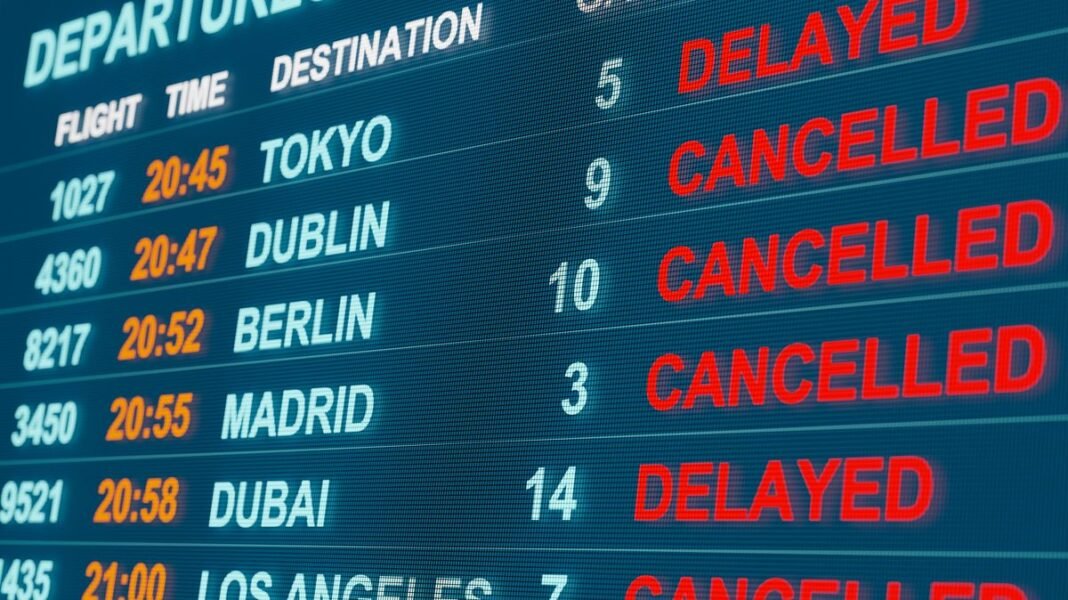
May might see the highest number of flight cancellations related to the Iran conflict easing off, according to an expert’s assessment. Families were advised not to panic about their summer vacations despite concerns about possible jet fuel shortages. Statistics reveal that airlines globally have cut 13,000 flights in May due to the Middle East conflict, resulting in almost two million seats being removed from scheduled flights this month.
The decrease in flights comes just before the upcoming half-term holidays. Many individuals are anxious about the fate of their already-booked holiday flights during the busy summer months. Aviation analyst John Strickland emphasized that the 13,000 flights canceled in May represent only about 1% to 2% of all scheduled flights. He cautioned against assuming that a similar number or more flights would be affected in the following months.
Strickland highlighted that airlines are aiming to operate their full flight schedules and that the current reductions are not a widespread slashing of flights that would disrupt people’s summer vacation plans. He mentioned that airlines are reasonably confident about the availability of jet fuel in the next six weeks, with indications that additional supplies are being secured from the US and other sources to compensate for the loss of fuel from the Gulf region.
Some airlines have opted to switch to smaller or more fuel-efficient aircraft to prepare for potential disruptions, as reported by aviation analytics firm Cirium. The firm noted that 120 scheduled flights from the UK to global destinations have been canceled in May, with 36 cancellations already reported for June out of nearly 22,000 scheduled flights.
The spike in jet fuel prices, which doubled after the US-Israel conflict with Iran in late February, has led to operational changes. German airline Lufthansa has cut 20,000 flights and warned that increased jet fuel costs could amount to £1.5 billion this year. Ryanair’s CEO Michael O’Leary indicated potential flight cancellations of 5% to 10% throughout May, June, and July.
Transport Secretary Heidi Alexander expressed confidence that most summer travelers would experience a similar travel situation compared to the previous year. She stated that there are currently no disruptions in jet fuel supply but acknowledged that the situation is evolving. Oil prices dropped to two-week lows amid reports of progress in US-Iran peace talks, with Brent crude falling to $102 a barrel.
Industry experts advised travelers to consider booking package holidays to safeguard their travel plans in case of further disruptions. They reassured the public that flights are still operating daily, and there is no significant issue with fuel supply. ABTA’s chief executive, Mark Tanzer, urged travelers not to worry about their holidays, emphasizing that cancellations globally constitute less than 1% of overall flights.