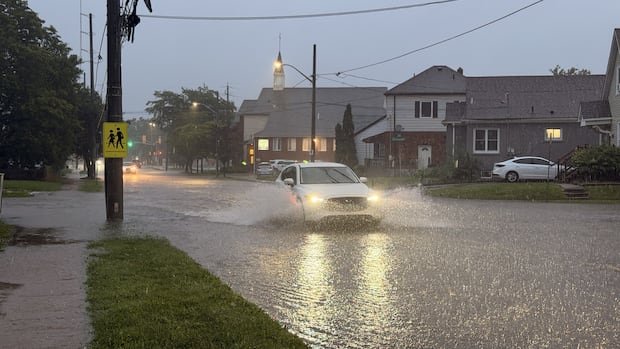
In St. Catharines, Ontario, remnants of recent floods still line the streets, with discarded couches, mattresses, and drywall serving as a stark reminder of the havoc caused by consecutive major storms within a short span of time. Mayor Mat Siscoe described these storms as the most severe the city has ever experienced in rapid succession over an 11 to 12-day period.
The initial storm was managed well by the stormwater system, but subsequent storms overwhelmed the already saturated ground, leading to widespread overland flooding and sewer backups into residences. Mayor Siscoe highlighted instances where sewage infiltrated homes, exacerbating the damage.
Dave White, the owner of White Orchard Farms near St. David’s, detailed how his garlic fields were submerged during the recent storms, although he managed to harvest his crops beforehand, learning from past experiences. He emphasized proactive measures taken to mitigate waterlogging by clearing ditches and creating drainage trenches.
White, who also operates a restoration company, expressed the overwhelming demand for assistance from homeowners grappling with flooded properties. He lamented the recurrence of flooding in properties he previously restored, indicating a cyclical challenge.
The flooding predicament in St. Catharines underscores the need for substantial investment in upgrading drainage and sewage infrastructure to cope with evolving climate patterns and urban development pressures. Mayor Siscoe highlighted the strain on outdated sewage systems and the necessity of modernization to prevent future crises.
The city has witnessed a surge in sewer system spending over the past decade, with a significant increase in capital budget allocation. However, the complete overhaul of the aging infrastructure presents a daunting financial and logistical challenge, compounded by a shortage of skilled labor in the sector.
Experts explained that recent rainfall in the Niagara region surpassed the capacity of existing drainage infrastructure, with the storms exceeding the design thresholds. The back-to-back nature of the storms further tested the drainage systems beyond their intended capabilities, resulting in operational challenges.
Efforts are underway to enhance St. Catharines’ flood resilience through innovative strategies like redesigning parks to absorb excess rainwater temporarily. The city is exploring revisions to the development process, requiring new projects to demonstrate stormwater retention plans.
Mayor Siscoe stressed the need for external funding support from provincial and federal sources to drive comprehensive infrastructure upgrades, acknowledging the prolonged timeline for implementation. The focus remains on safeguarding residents’ quality of life through sustainable infrastructure development efforts.