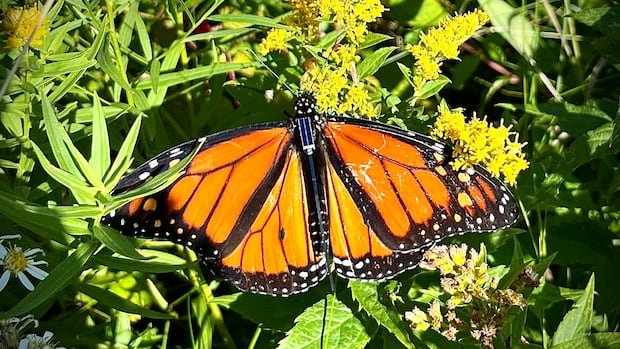
In the past, locating a tagged monarch butterfly during migration depended on chance, with someone spotting the small sticker on the insect’s wing and reporting it along the route.
This year, Nature NB has introduced a new approach that eliminates the uncertainty.
Bluetooth-enabled tags, known as BluMorpho tags, were affixed to monarch butterflies for the first time in New Brunswick in collaboration with the Saint John Naturalist Club, Point Lepreau Bird Observatory, and Environment and Climate Change Canada.
Francie Morgan, the program co-ordinator at Nature NB, expressed enthusiasm about this innovative step in monarch conservation in the Maritimes.
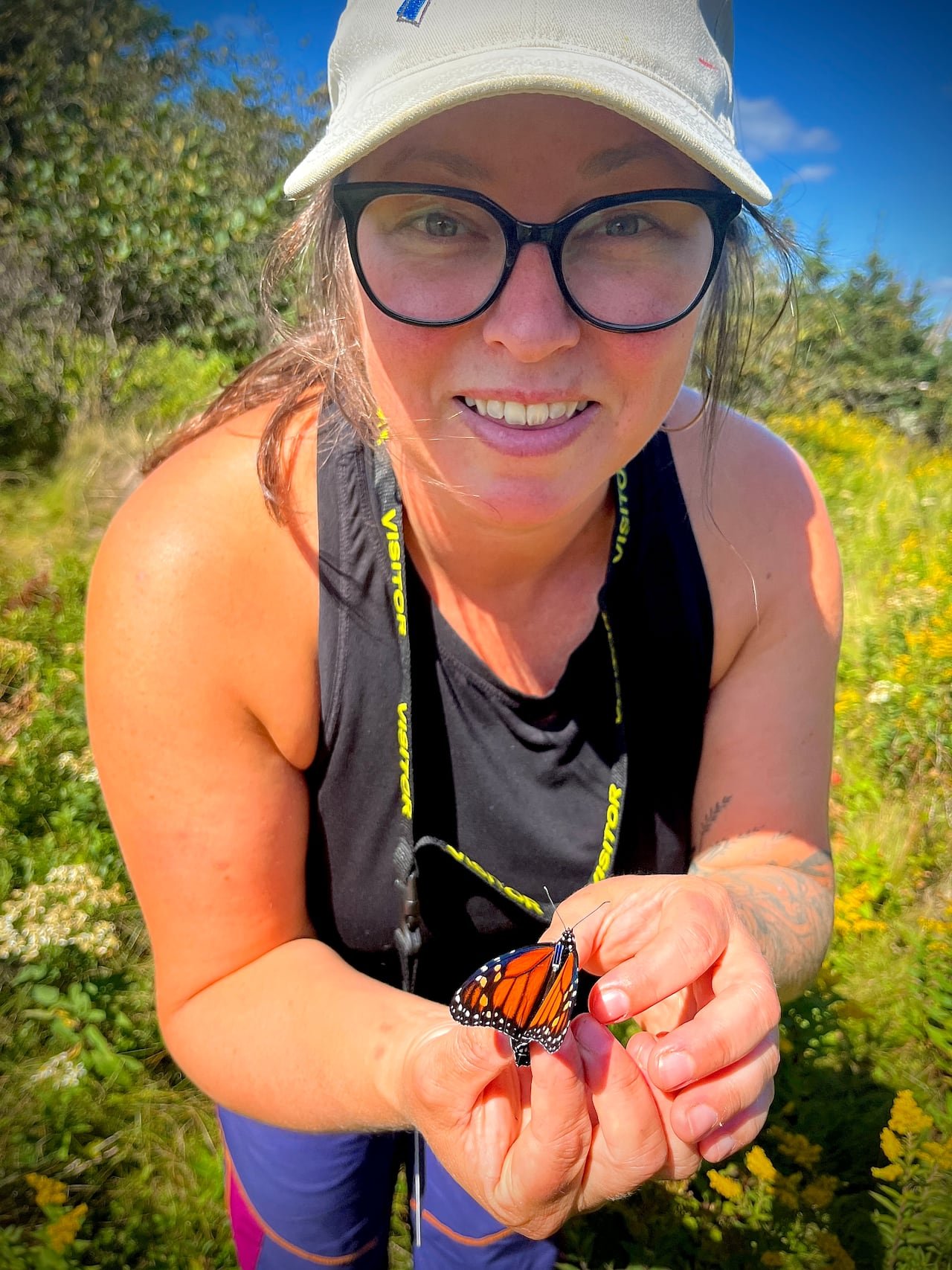
Francie Morgan displays a monarch with a BluMorpho tag before release. (Submitted by Francie Morgan)
These tags, weighing about 0.066 grams and powered by solar energy, are attached to the butterfly’s thorax using eyelash glue, with a small antenna running along the abdomen.
Unlike traditional wing tags that require physical recapture for data collection, the BluMorpho tags operate through passive Bluetooth interactions.
Individuals with Bluetooth activated on their mobile devices will automatically record data when within 100 meters of a tagged monarch.
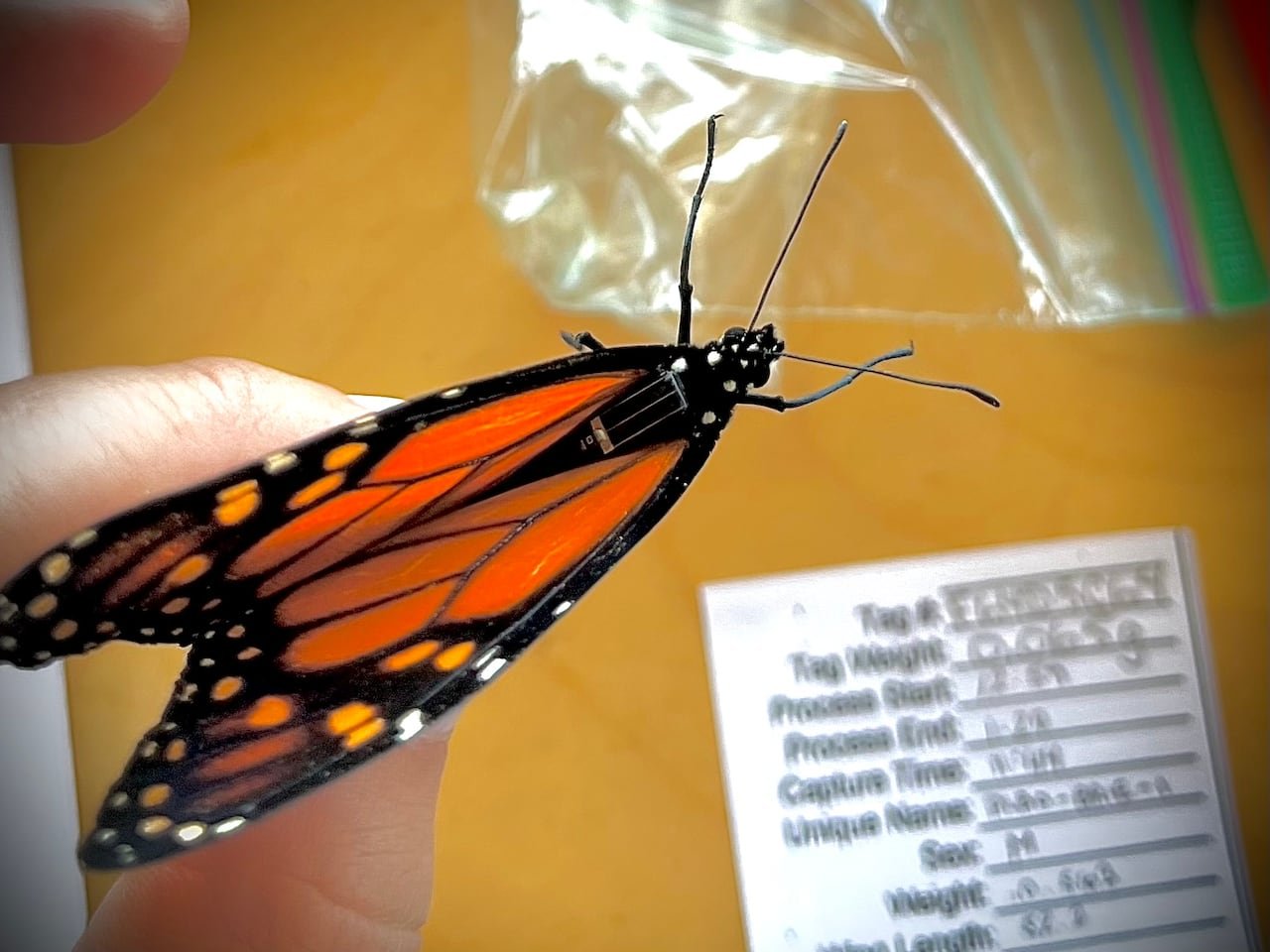
The BluMorpho tag, attached with eyelash glue, weighs about 0.066 grams. Capture details like time and sex are recorded before release. (Submitted by Francie Morgan)
Morgan encouraged people to download the Project Monarch app to scan for these tags and track the monarchs’ journey.
Jim Wilson, a birder and naturalist at the Point Lepreau Bird Observatory, highlighted the significance of this transition.
Previously, the process involved placing a numbered wing tag on a butterfly and relying on chance sightings for reports. Now, with online tracking, the monarch’s whereabouts can be easily monitored.
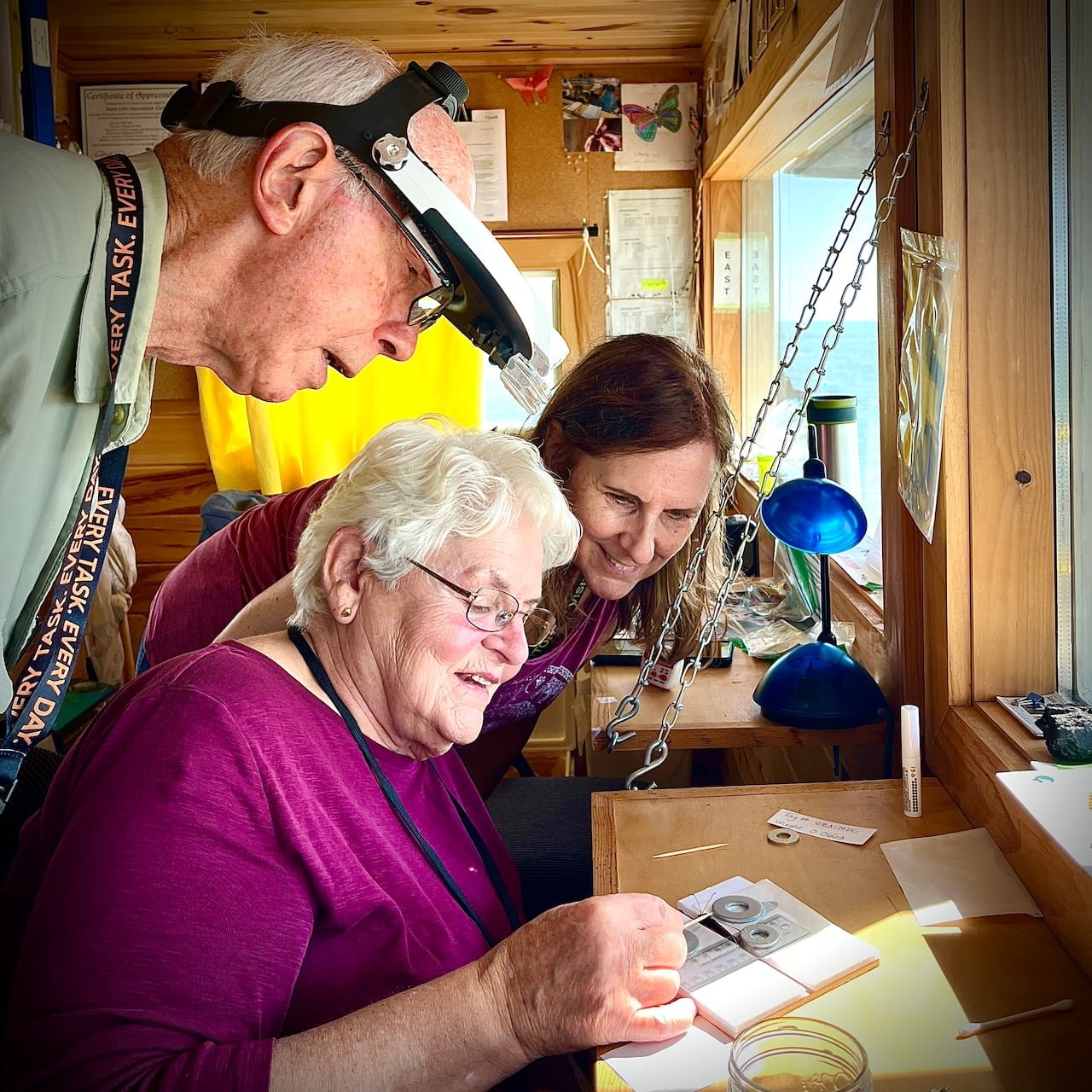
Jim Wilson, Jean Wilson, and Janet Kempster tag a monarch at Point Lepreau Bird Observatory. (Submitted by Francie Morgan)
Last year, this technology was first introduced on monarchs in Canada through a collaborative effort between Environment and Climate Change Canada and Birds Canada in southern Ontario.
Nature NB secured funding following a successful pilot, with support from the Environmental Trust Fund of New Brunswick and additional tags supplied by the federal government.
Due to border delays,