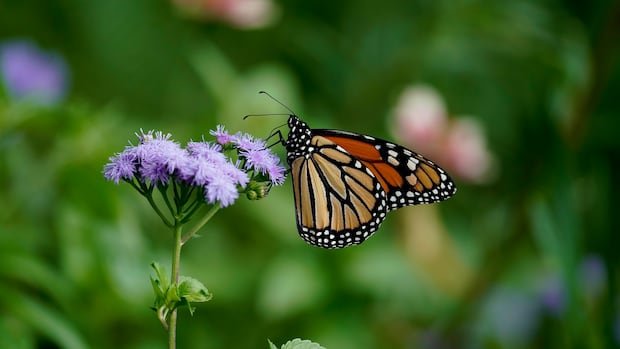
MaryAnn Lepp has experienced a significant increase in monarch activity in her garden, with 20 caterpillars spotted feeding on her swamp milkweed in just one day this week. This surge is part of a larger trend seen by many Canadian monarch enthusiasts, who are observing a rise in backyard milkweed patches thriving in the wet and hot conditions of the Prairie this summer.
The abundance of caterpillars, chrysalises, and monarch butterflies in various regions has sparked excitement among butterfly enthusiasts, who are documenting the phenomenon on social media platforms like Manitoba Monarch Mission. While conservation experts cannot definitively attribute this surge to favorable weather, they acknowledge that the increased sightings bode well for the federally endangered species known for their annual migration between Canada and Mexico.
Marika Olynyk, curator of the Living Prairie Museum, noted a noticeable increase in monarch populations in Winnipeg this year. The museum’s tall grass prairie preserve is home to a variety of native plants that attract pollinators, including different types of milkweed. Monarch butterflies primarily feed on milkweed flowers for nectar, but they also forage on other flowering plants like the meadow blazing star.
Despite efforts by individuals like Lepp to plant milkweed and native wildflowers, these plants are still not as abundant as they once were due to habitat loss caused by the conversion of native grasslands into farmland. Olynyk emphasized that habitat loss remains the biggest threat to monarchs, as tallgrass prairie, which used to cover vast areas in North America, has significantly diminished over time.
The monarch’s endangered status was officially recognized by the Committee on the Status of Endangered Wildlife in Canada in 2016, prompting calls for increased protection measures. In December 2023, the Canadian government classified the monarch as endangered, making it illegal to harm or capture them on federal lands. Efforts to monitor monarch populations include tracking their presence in forest wintering grounds in Mexico, where only about half of the sustainable population is currently observed.
In addition to the increase in monarch numbers, the native prairie garden at the Assiniboine Park Zoo has seen a rise in the critically endangered Poweshiek skipperling butterfly. This species, facing even more dire circumstances than the monarch, is on the brink of extinction and can only be found in a small patch of native grassland in southeastern Manitoba.
The zoo has been breeding and releasing Poweshiek skipperlings in an attempt to bolster their population, with promising signs of progress this summer. Laura Burns, conservation programs manager at the zoo, highlighted the positive impact of these efforts and noted that favorable weather conditions have likely benefited not only monarchs and Poweshiek skipperlings but also other butterfly species.
Looking ahead, zoo staff will be aiding monarchs by attaching tiny radio transmitters to track their migration to Mexico. Enthusiasts like Lepp are dedicated to supporting the growth and survival of caterpillars and chrysalises in their care, emphasizing the importance of conservation efforts in preserving these delicate species and their habitats.