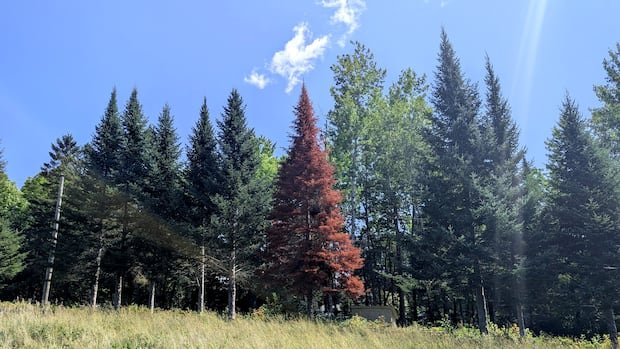
Balsam fir trees in New Brunswick are undergoing a concerning transformation, as they are turning red and perishing following the exceptional drought experienced last summer. This alarming phenomenon is sparking worries about the fate of these iconic provincial trees.
Professor Anthony Taylor, a forestry researcher at the University of New Brunswick, has been closely monitoring the situation. He has been in contact with woodlot owners who are witnessing the damage firsthand. The once vibrant evergreen trees, commonly selected for Christmas decorations, are gradually changing color, drying out, and succumbing to the harsh conditions.
According to Taylor, the observed pattern aligns with previous occurrences following hot and dry summers. He emphasizes that the warm and dry environment, such as the prolonged drought last year, adversely affects the balsam fir’s growth capacity.
Taylor’s extensive research on the impact of climate change on New Brunswick’s forests has revealed similar die-offs of balsam fir trees after unusually hot and dry summers in 1986 and 2018. He explains that during drought conditions, the trees halt the photosynthesis process prematurely, hindering their growth and energy production essential for sustaining vital functions and defenses.
The shallow root system of balsam firs further exacerbates their struggle during dry periods by limiting their access to water. Woodlot owner Peter McKeil has observed the distressing effects on his property, noting the gradual reddening of the trees from the lower branches upwards. The ongoing die-off is evident as new red spots appear regularly, with an estimated loss of around 100 trees so far.
Despite salvaging some of the deceased trees for lumber, McKeil is adjusting his harvesting practices to maximize the remaining fir trees’ value before more succumb. He expresses concerns about the future of the species, particularly in southern New Brunswick, attributing their plight to the worsening climate conditions.
Taylor stresses the urgency for climate action, emphasizing the importance of addressing the visible impacts of climate change on the region’s iconic balsam fir trees. He views the current situation as a tangible indication of the broader environmental challenges and advocates for an immediate shift away from fossil fuels and excessive deforestation to mitigate climate change’s detrimental effects.
As the balsam fir trees continue to exhibit distress signals in response to the changing climate, Taylor hopes that increased awareness and proactive measures will be taken to safeguard these vital ecological resources for future generations.