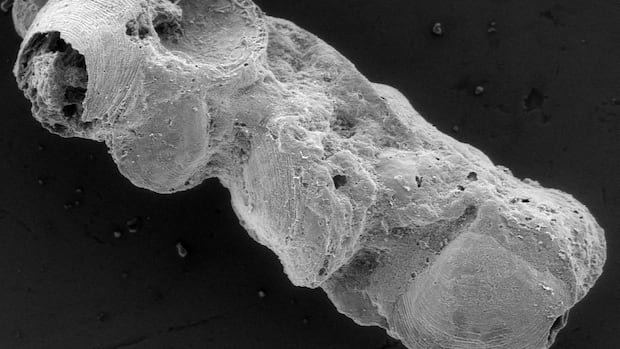
Long before the era of dinosaurs, a surge in biodiversity led to the rise of early ancestors of present-day animals – and an uptick in fecal matter. A recent study sheds light on how the examination of coprolites, fossilized feces, aids in comprehending Earth’s ancient ecosystems, nutrient cycles, and animal interactions.
The research, detailed in the journal Trends in Evolution & Ecology, delved into the analysis of fecal fossils dating back to the Cambrian period, approximately 540 million years ago. By studying feces remnants from primitive worms, invertebrates, and mollusk-like creatures, scientists inferred that fecal matter likely played a vital role in enhancing deep-water ecosystems’ livability and nutrient availability during that era, long before the age of dinosaurs.
The discovery that fecal matter was abundant during the Cambrian period holds significance for deciphering the origins of modern ocean ecosystems. Julien Kimmig, co-author of the study and head of the paleontology division at the Karlsruhe Natural History Museum in Germany, emphasized the crucial role of feces in sustaining both contemporary and historical ecosystems.
Examining coprolites, mineralized fecal matter found in rocks, provides valuable insights into the inhabitants and functioning of ancient ecosystems. By scrutinizing records of numerous coprolites from various global deposits, including specimens collected by researchers over the years, the study identified feces from various organisms such as burrowing worms, arthropods, brachiopods, and hyoliths.
Beyond unraveling evolutionary patterns and dietary habits of ancient creatures, the study of coprolites aids in understanding Earth’s ecology and the transformative impact of the Cambrian Radiation. This explosive emergence of modern animal groups during the Cambrian Explosion brought about profound changes to ecosystems, highlighting the vital role fecal matter played in shaping ancient environments.
The research underscores the pivotal expansion of fecal remains during the Cambrian Radiation compared to the preceding Ediacaran period. By delving into waste products, nutrient cycles, and their cascading effects on biological diversity, scientists can gain a deeper understanding of past ecosystems and draw parallels to present and future environmental scenarios.
For paleontologists, coprolites have become a focal point of investigation, offering unique insights into past life forms and ecological dynamics. By studying coprolites from the Mesozoic era when dinosaurs roamed the Earth, researchers can uncover intricate details of ancient interactions, including predator-prey relationships and carbon cycling processes.
Karen Chin, a paleontologist at the University of Colorado, emphasizes the significance of coprolites in revealing unexpected behaviors of ancient organisms, shedding light on dietary preferences and ecological interactions. Despite the challenges in studying coprolites, their role in elucidating past ecosystems and evolutionary trajectories remains indispensable.
The study of fossilized feces not only enriches our understanding of ancient ecosystems but also provides a gateway to predicting and modeling future environmental scenarios. By delving into the geological archives preserved in coprolites, researchers can glean valuable insights that resonate with modern ecological challenges and pave the way for informed conservation strategies.