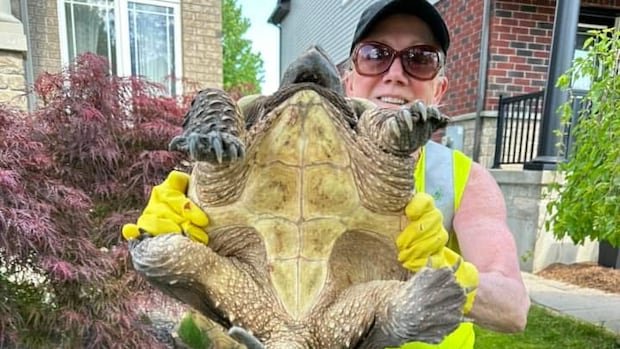
Motorists traveling through Wellington County now have access to a new emergency hotline dedicated to assisting turtles found on the road.
The Wellington Turtle Conservation Group introduced its hotline in August in response to the high rate of turtle fatalities in the county.
Sandy Nicholls, the founder of the Wellington Turtle Conservation Group, emphasized the urgent need for the hotline due to the abundance of wetlands, gravel pits, and turtles in Wellington County.
Nicholls highlighted that the hotline was established because many individuals would contact the group’s social media platforms regarding stranded turtles without providing precise locations.
When people call the turtle hotline, they are asked specific questions to pinpoint the exact location of the stranded or injured turtle.
Nicholls stressed the hotline’s significance during nesting season, with male turtles being most active in May and females in June.
The predominant turtle species in Wellington County, mainly snapping turtles and painted turtles, are facing a rapid decline, according to Nicholls.
She recounted instances where landowners have noticed a substantial reduction in the turtle population within a short period.
The decline in turtle populations in Wellington County is attributed to road fatalities, loss of habitat, and illegal poaching activities.
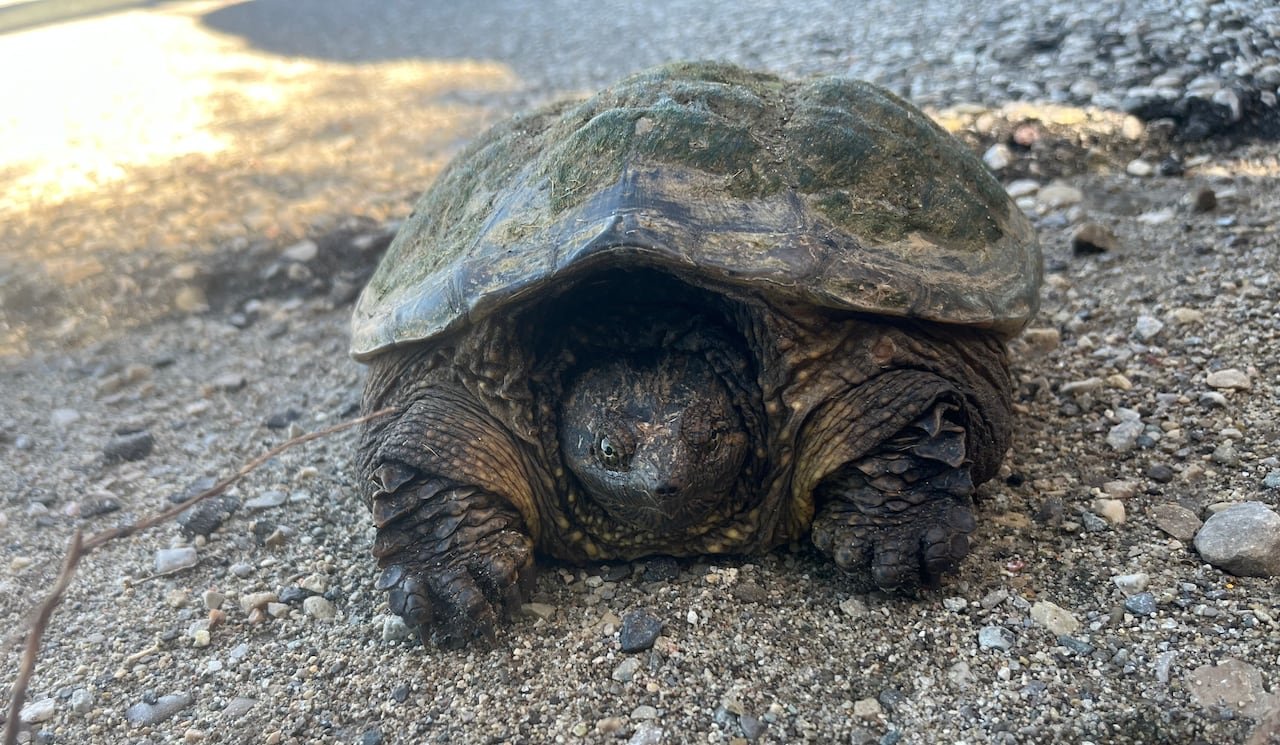
Snapping turtles are classified as a species at risk in Ontario and are designated as a special concern.
Although Midland and eastern painted turtles are federally classified as a special concern, they do not hold the same status in Ontario. The Canadian government’s website attributes the decline in painted turtles to the loss of approximately 70% of wetlands in southern Ontario over the past two centuries.
Nicholls advises the public to contact the hotline even if a turtle appears deceased or severely injured.
Injured turtles are transferred to the Ontario Turtle Conservation Centre for necessary medical care.
Nicholls mentioned that the center utilizes various medical procedures, such as pins and screws, to treat injured turtles.
She emphasized the importance of contacting the hotline even if the turtle is deceased, as female turtles may still carry viable eggs.
“They might be able to extract those eggs and incubate them before releasing them back into the original wetland habitat,” Nicholls explained.
The activities of the Wellington Turtle Conservation Group involve responding to turtle incidents, safeguarding nests, rescuing hatchlings, and releasing them into suitable environments.
Nicholls also highlighted the presence of a hotline operated by the Ontario Turtle Conservation Centre for reporting injured turtles across Ontario.
To contact the Wellington Turtle Conservation Group hotline, individuals can dial 226-906-7014.