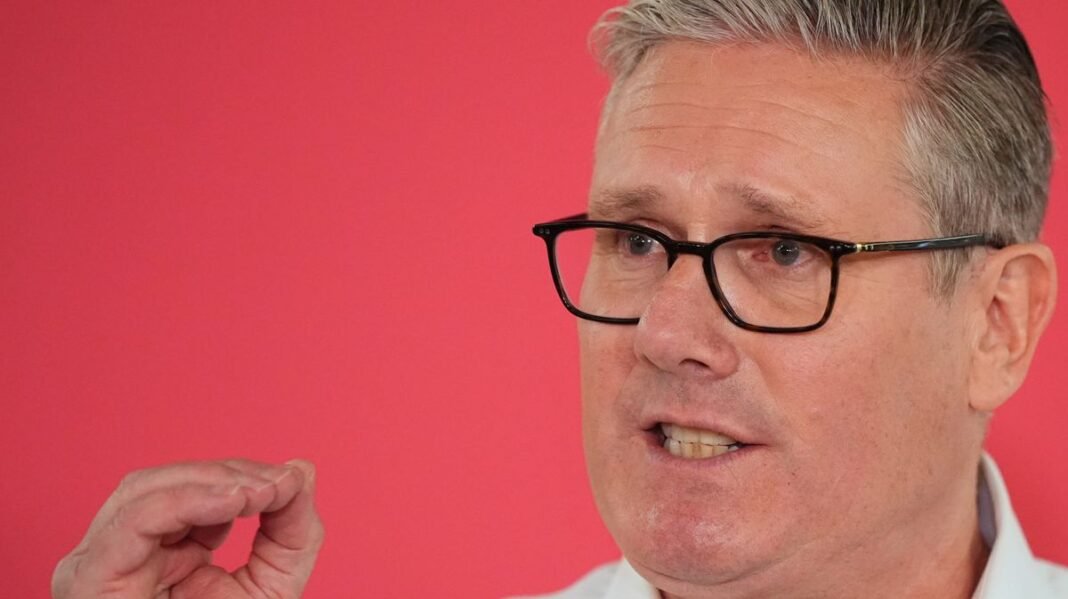
Keir Starmer’s leadership is at a critical juncture as Cabinet members have cautioned him that his tenure is in jeopardy amid a significant uprising within the Labour Party.
Divisions within his top team have surfaced, with Home Secretary Shabana Mahmood reportedly joining several ministers in advising the Prime Minister to consider outlining a timeline for his exit. While Deputy PM David Lammy and Chief Whip Johnny Reynolds stood by his side as he deliberated his options, they did not explicitly urge him to step down.
Housing Secretary Steve Reed and Attorney General Lord Hermer were among those advocating for the PM to continue the fight, according to sources. In response to the resignations of rebel ministers, No10 took a firm stance by appointing six new ministerial aides. The pressure on Mr. Starmer intensified following heavy losses suffered by Labour in the recent local elections.
A crucial Cabinet meeting chaired by Mr. Starmer is scheduled for Tuesday, marking his first encounter with his top team since the electoral setback. Tensions escalated further after the Prime Minister’s pivotal address failed to pacify his detractors. Nearly 70 MPs have publicly called for Mr. Starmer’s resignation, with backbencher Catherine West leading a tumultuous effort to unseat him.
The momentum for change gained traction as parliamentary private secretaries Tom Rutland, Joe Morris, Melanie Ward, and Naushabah Khan resigned, while Sally Jameson publicly called for the PM to step down. Speculation looms over potential Cabinet intervention as resignations mount.
Despite facing mounting pressure, Mr. Starmer remained resolute, vowing not to relinquish his position and pledging to confront any challengers head-on. He emphasized the risks of leadership changes destabilizing the nation and cautioned against veering towards chaos, asserting that Labour’s strength lies in unity and a clear vision for governance.
While Mr. Starmer outlined key initiatives such as nationalizing British Steel and cracking down on far-right elements entering the UK, his proposals failed to quell the dissent within the party. Criticism of his speech as lacking substance and offering no new direction reverberated among MPs, highlighting the deepening crisis within Labour.
Despite efforts by some allies to rally support for Mr. Starmer, a growing chorus of dissent within the party underscored the urgency for decisive action. The debate over the timing and process of leadership succession intensified, with potential challengers positioning themselves strategically to capitalize on the evolving political landscape.
As the turmoil within the Labour Party continues to unfold, the path ahead for Mr. Starmer remains fraught with challenges, as key figures within the party weigh their options and the future of the leadership hangs in the balance.