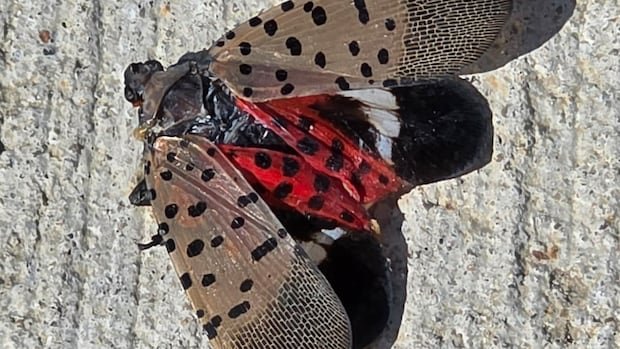
An invasive insect that poses a threat to grapevines and other vegetation has been found in Canada for the first time, as reported by the Canadian Food Inspection Agency (CFIA). The initial detection of the spotted lanternfly occurred in Windsor.
Previous sightings of the spotted lanternfly in Windsor have been reported by local residents, according to a non-profit organization dedicated to preventing the spread of invasive species. However, this recent discovery marks the first identification of the insect through an official agency survey, as stated by the Invasive Species Centre.
The presence of the spotted lanternfly could have severe consequences for the grape and wine industry, as it is known to cause harm to grapevines, leading to significant economic impacts. Additionally, the insect could affect various crops, horticulture, forestry, residential areas, and community parks if its spread is not controlled.
Originating from southeast Asia, the spotted lanternfly was first detected in North America in Pennsylvania in 2014. It has the ability to feed on the sap of more than 100 different plant species.
To address the situation, the Invasive Species Centre urges individuals to familiarize themselves with the appearance of the insect. If spotted, people are advised to take photographs, securely contain the insect or its eggs, and report the finding to the CFIA promptly. The release emphasizes the importance of Canadians reporting any suspected sightings of the spotted lanternfly to enable appropriate action by the CFIA.
Detailed guidelines on how to identify a spotted lanternfly have been provided by the Invasive Species Centre and CFIA. Adults of the species are approximately 25mm long and 12mm wide, characterized by specific color patterns on their wings and abdomen. Nymphs, on the other hand, exhibit distinct color variations and behaviors during different growth stages. The eggs of the spotted lanternfly are typically observed as gray smears on host trees and surfaces, with specific characteristics that indicate their presence.
Furthermore, the release highlights the insect’s excretion of honeydew, which can attract bees and wasps and promote the growth of sooty mold. Measures to reduce the spread of the spotted lanternfly include thorough inspections of vehicles and outdoor items when visiting infested areas, as well as avoiding the transportation of firewood from one location to another.
In conclusion, vigilance and prompt reporting of any spotted lanternfly sightings are essential in mitigating the potential impact of this invasive species on Canada’s agricultural and ecological landscapes.