Almost two years following an unusual fish occurrence at Canada’s largest nuclear power plant that posed a safety challenge, recently acquired documents reveal the remarkable nature of the incident. It has been highlighted by experts that atypical ecological circumstances are increasingly posing a threat to nuclear facilities worldwide.
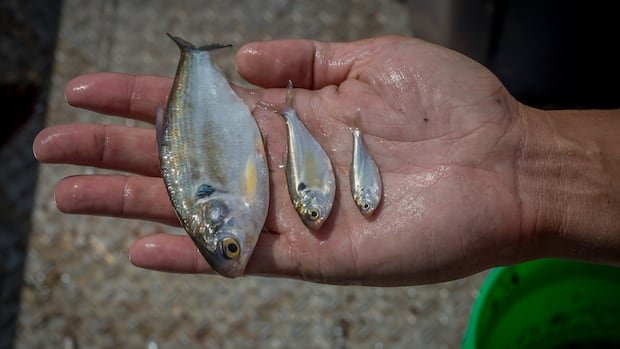
In February 2025, a massive influx of gizzard shad overwhelmed the cooling systems at the Bruce Nuclear Generating Station near Tiverton, Ont., resulting in the shutdown of one reactor, decreased power in another, and the sight of dead fish along Lake Huron shores for several days. Federal and provincial records, totaling over 1,200 pages, demonstrate how an environmental phenomenon involving a small, cold-sensitive fish tested the capabilities of Canada’s largest nuclear power plant in unforeseen ways.
Bruce Power, the private operator of the plant, opted not to participate in a broadcast interview but later issued a written statement without directly addressing specific questions posed by CBC News.
An examination conducted by Bruce Power revealed that the plant had experienced “a novel environmental event,” while Canada’s nuclear regulator described an unprecedented volume of gizzard shad that overwhelmed the plant’s defense mechanisms designed to prevent fish from entering the cooling water system.
Further investigations in June 2025 concluded that the two fish influxes in February posed a threat to reactor safety. Experts in the field, such as David Novog, a professor specializing in Nuclear Safety, emphasized that any challenge to reactor safety implies a reduction in the effectiveness of defense mechanisms, necessitating the shutdown of nuclear power stations as a safety precaution.
Douglas Boreham, a former principal scientist and manager at Bruce Power, clarified that while the reactors responded as intended when their cooling systems were disrupted, there was no actual risk to reactor safety.
The Canadian Nuclear Safety Commission (CNSC) warned in an April 2026 report that the fish die-off incident on Feb. 13, 2025, disrupted the cooling systems for two operational reactors, leading to the shutdown of Unit 2 and a power reduction in Unit 1. Prior to this, a similar event on Feb. 1 impacted the cooling of Unit 4, which was already offline for refurbishment.
Estimates indicated that around 8.1 million gizzard shad were present near the Bruce A facility on a single day in February 2025, surpassing previously disclosed figures. The large population of fish was explained by warmer winters leading up to 2025, allowing for substantial fish development before colder conditions made them susceptible.
The disturbance caused by the fish event led to a significant number of fish deaths at the Bruce A site, requiring specialized equipment to remove and dispose of the carcasses. The shutdown of a reactor has implications on the electricity grid, with the process of restarting a reactor taking several days, impacting the overall electricity supply.
Instances of environmental conditions disrupting cooling systems in nuclear plants are not isolated incidents, with similar events reported in other countries like Romania and France. Nuclear facilities are facing the challenge of adapting to changing environmental conditions while playing a crucial role in combating climate change.
Following the incident, Bruce Power invested nearly $10 million in mitigation measures and research to prevent future disruptions caused by mass fish events. The company has implemented various measures like physical barriers, underwater deterrents, and advanced monitoring systems to mitigate potential risks associated with climate change.
Experts emphasize the importance of implementing preventive measures to ensure the uninterrupted operation of nuclear plants as they play a key role in providing low-carbon electricity in the fight against climate change.