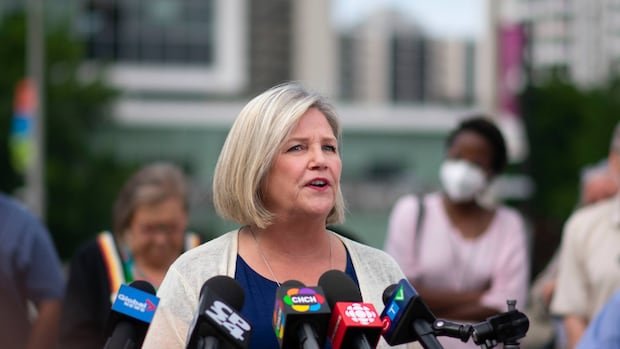
Hamilton Mayor Andrea Horwath has revealed her experience of being in an abusive relationship in an open letter, highlighting the challenges she has faced amid a publicized battle involving her former partner and the city. In her letter shared on Wednesday, Horwath emphasized the importance of speaking out against abuse and empowering survivors to prioritize their safety and truth.
Following criminal harassment charges and a no-contact order, Horwath maintained her distance, a common step taken by many survivors. Despite the difficulty of discussing such personal matters, she expressed solidarity with those who carry similar burdens silently for extended periods.
Recently, the property standards committee in the city made a decision related to a property owned by Horwath, where her ex-partner resides. The committee ruled that it lacked jurisdiction to consider a late appeal from Horwath regarding required property repairs, leading to disappointment on her part. Despite this setback, she remains committed to addressing the property issues and closing this distressing chapter in her life.
Experts, including Melissa Kimber from McMaster University, laud Horwath’s courage in sharing her story of abuse, emphasizing the bravery it takes for survivors to come forward. Kimber highlighted the various forms of intimate partner violence, underscoring the challenges faced by individuals disclosing their experiences and the potential backlash, particularly for public figures.
Acknowledging the stigma and fear associated with speaking out, Horwath’s revelation aims to encourage other survivors and raise awareness about the prevalence of abuse. By shedding light on her own ordeal, she hopes to combat shame and stigma while fostering a more compassionate and understanding response to survivors of intimate partner violence.
The disclosure comes as Hamilton, along with other Ontario municipalities, grapples with the impact of an intimate partner violence epidemic, especially heightened during the COVID-19 pandemic. Horwath’s decision to share her story underscores the collective responsibility to support survivors and address the underlying issues contributing to this pervasive societal problem.