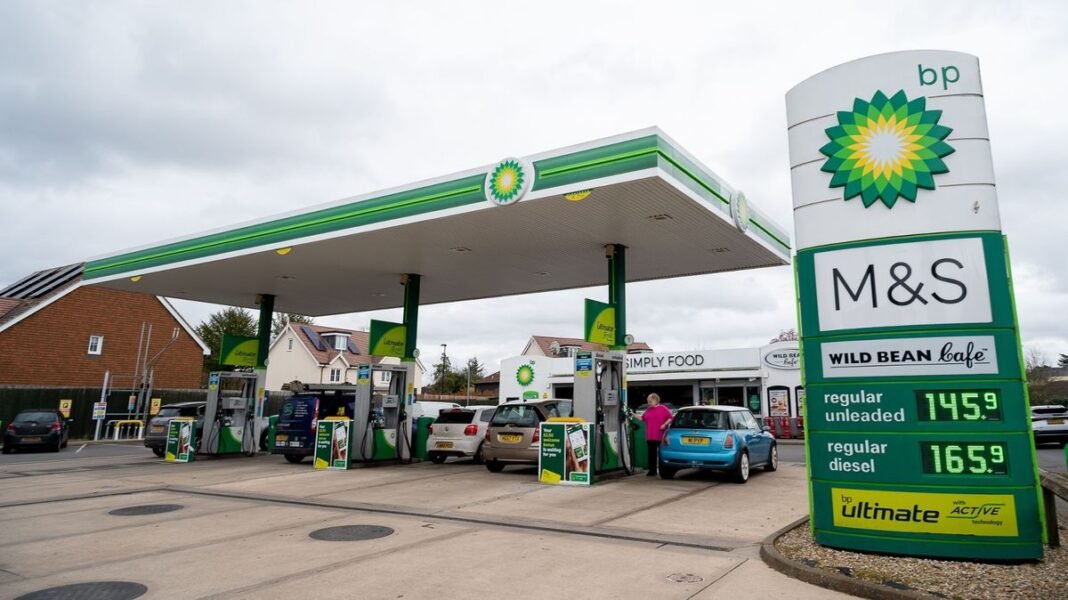
Oil company BP faced criticism after reporting a profit of nearly £2.4 billion amidst the repercussions of the Iran conflict on regular households. The substantial earnings for the first quarter of this year, equivalent to £365 per second, were driven by a surge in oil prices following the outbreak of the conflict in February. BP’s profits more than doubled compared to the same period last year, surpassing the £2 billion expert projections.
The price of Brent crude, a significant global oil benchmark, soared from $60 (£44) per barrel before the Middle East conflict to a peak of $119 (£88) due to Iran’s disruption of the Strait of Hormuz, leading to an energy crisis. While the blockade affected energy shipments, it also resulted in a windfall for oil producers due to the escalating prices. The trend of rising oil prices continued, reaching $110 (£81) per barrel, indicating ongoing tensions between Tehran and Washington.
Critics, such as Simon Francis from the End Fuel Poverty Coalition and Maja Darlington from Greenpeace UK, expressed concerns about energy companies profiting from geopolitical conflicts at the expense of consumers. Patrick Galey of Global Witness highlighted the parallels between BP’s current profits and past instances where oil firms benefited from geopolitical crises.
BP’s new CEO, Meg O’Neill, emphasized the company’s commitment to ensuring safe and efficient operations while collaborating with stakeholders to mitigate disruptions caused by the conflict. The surge in wholesale energy prices resulting from the Iran conflict is expected to benefit oil companies but has led to increased fuel costs for consumers.
Household energy bills are predicted to rise, contributing to inflation and economic challenges globally, including in the UK. Robert Palmer from campaign group Uplift criticized BP for prioritizing profits over investments in renewable energy sources, which are crucial for transitioning away from fossil fuels.
Chris Beauchamp, chief market analyst at IG, acknowledged BP’s impressive profit growth but cautioned about potential disruptions due to the ongoing conflict. The company’s success amid the conflict has raised concerns about its long-term strategy and environmental impact.