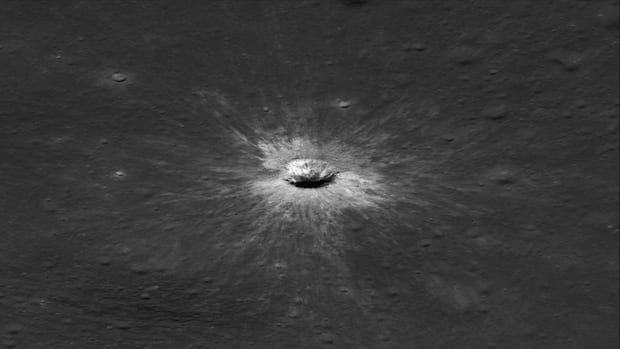
Scientists have made a groundbreaking discovery of a crater on the moon that surpasses the size of the Roman Colosseum. This colossal crater, measuring 222 meters across and up to 43 meters deep, is the largest known impact crater formed in recent times within the solar system.
Experts estimate that such a significant event occurs approximately once every 132 years, highlighting the rarity and importance of this find as NASA prepares for lunar base construction for astronauts.
The crater was identified by NASA’s Lunar Reconnaissance Orbiter (LRO) on the moon’s near side in May 2024, following an impact caused by a fragment from an asteroid or comet. Despite the impact going unnoticed by Earth-based and space telescopes at the time, LRO captured wide-angle images that revealed the crater’s presence in August 2025, with more detailed pictures confirming the discovery in early 2026.
Named after the late Thomas McGetchin, a former director of Houston’s Lunar and Planetary Institute, the crater disrupted over 100 kilometers of the lunar surface. Dust and rocky soil were ejected at unexpectedly high angles, reshaping the area.
A subsequent study identified a seven-kilometer-wide cold spot surrounding the crater, indicating a loosening of the moon’s topsoil. Co-author David Paige from the University of California, Los Angeles, likened this process to gardening, where impacts act as a way to churn the regolith, the loose material covering bedrock.
Mark Robinson, chief scientist for the LRO, noted that the moon’s top two centimeters of soil are overturned by ejected material every 80,000 years, a faster rate than previously believed. Robinson dispelled the myth that the footprints left by Apollo moonwalkers will endure forever, stating they will likely vanish within that timeframe.
The next phase involves calculating the risk of ejected crater material impacting NASA’s planned lunar base to inform the engineering of structures for enhanced protection against potential damage.