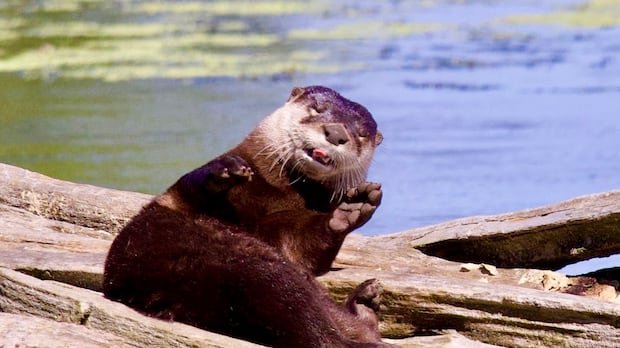
During early August, wildlife photographer Terry Chettle captured a fascinating moment at the Grimsby Wetlands while photographing a green heron. An unexpected visitor, a river otter, appeared and playfully interacted with the heron, surprising Chettle and the bird.
Chettle, a resident of Beamsville, Ont., expressed his surprise at the rare otter sighting in the area. As the otter moved to a log to groom itself, Chettle seized the opportunity to photograph it, showcasing its playful antics.
On the same day, Bruce and Laurie Mackenzie encountered Chettle during a walk in the wetland. Chettle pointed out the otter to them, with Bruce Mackenzie confirming the rarity of the sighting. He mentioned that it was possibly the first otter sighting near the wetlands in recent times, and to his knowledge, no one else has reported seeing the otter since then.
The wetland area, previously used for sewage storage by the Niagara Region, is now managed by the Hamilton Naturalists’ Club, covering approximately 12 hectares along Lake Ontario’s South Shore. Bruce Mackenzie, involved with the naturalists club as the wetlands’ project manager, highlighted the significance of the otter sighting in showcasing successful habitat restoration and improved water quality. He noted previous rare species sightings in the wetlands, such as the threatened least bitterns in Ontario.
Otters as a Conservation Success
Laura Timms, a program manager in natural heritage management at Credit Valley Conservation, emphasized the positive trend of river otter sightings as a conservation success story. The conservation authority oversees the Credit River watershed, including significant areas in Mississauga and Peel Region. In 2025, an article was published detailing the comeback of river otters in the region.
Timms noted a notable increase in documented otter sightings over the years, indicating a positive population trend. Previously mistaken for minks, otters are now more frequently observed in various conservation areas, with instances of otters giving birth to pups at specific locations this year.
Despite efforts to monitor otter populations, the Niagara Peninsula Conservation Authority confirmed they do not track wildlife observations, while the Hamilton Conservation Authority did not provide a response at the time of publication.
Historically, river otter populations faced a decline in the 1800s due to hunting, environmental degradation, and habitat loss. However, conservation efforts have led to a resurgence of otter populations in North America, attributed to sustained environmental restoration and conservation practices.
Enhancing Biodiversity
Credit Valley Conservation highlighted that river otters can grow up to 1.4 meters in length and weigh between five to 14 kilograms. These carnivorous animals inhabit rivers, lakes, and creeks, preying on fish, clams, insects, and other aquatic creatures. Timms stressed the importance of not only celebrating otters but also addressing broader biodiversity challenges, such as the loss of wetlands that support diverse species, store carbon, and mitigate flooding.
To ensure the thriving of all species and witness more conservation success stories like otters, continuous efforts are needed to restore and safeguard habitats.