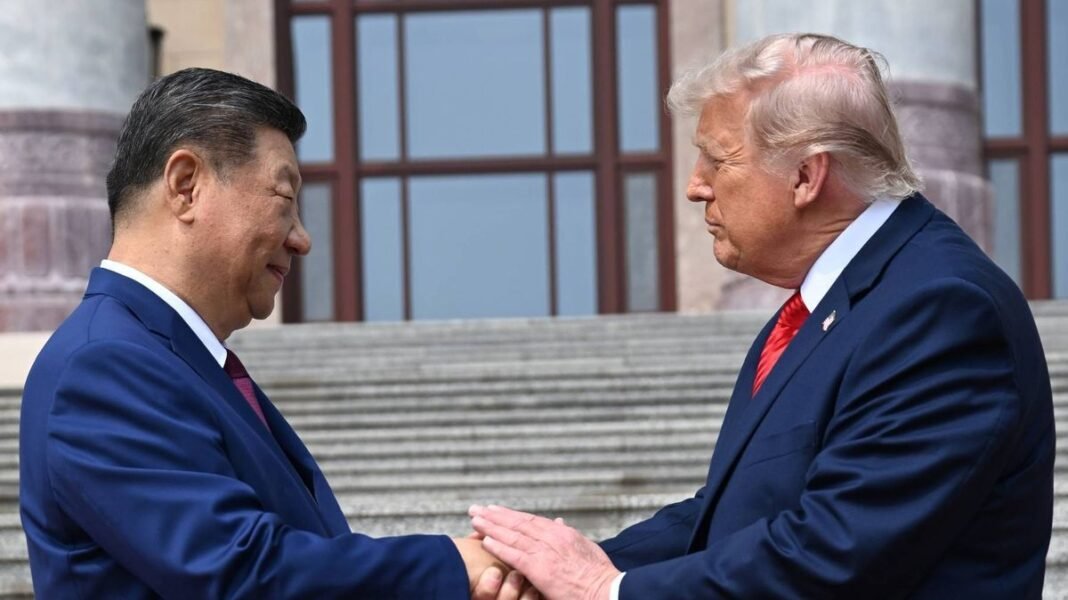
Upon arriving in Beijing, Donald Trump positioned himself as the preeminent negotiator on the global stage. Shortly after, Vladimir Putin’s arrival conveyed a sense of returning to a long-standing strategic alliance.
As their visits concluded, the stark contrast in outcomes became apparent for the US president. The interactions, even the handshakes, revealed a notable disparity. Putin’s greeting of Xi Jinping exuded confidence and familiarity, symbolizing a deep-rooted relationship. In contrast, Trump’s approach seemed eager and somewhat out of place, akin to a fan meeting a celebrity. The difference in demeanor spoke volumes.
Trump’s visit yielded little tangible progress or significant breakthroughs. In contrast, Putin’s objectives were effectively met. The strengthening of the Joint Strategic Partnership between China and Russia, with substantial investments and trade agreements, showcased a strategic alignment that bypassed traditional norms.
Xi Jinping’s leadership, projecting stability and assurance, has positioned China as a key player in global affairs. Leaders now seek Beijing’s partnership and reassurance, marking a notable shift from previous alliances with Washington.
Putin’s visit, despite its theatrical elements, underscored the enduring strategic importance China places on Russia. In contrast, Trump’s visit highlighted America’s waning influence in shaping global outcomes, despite its military and economic prowess.
The essence of these visits underscores a shifting geopolitical landscape, with Xi Jinping emerging as a central figure rather than a mere participant. The dynamics at play suggest a reordering of power and influence on the world stage.