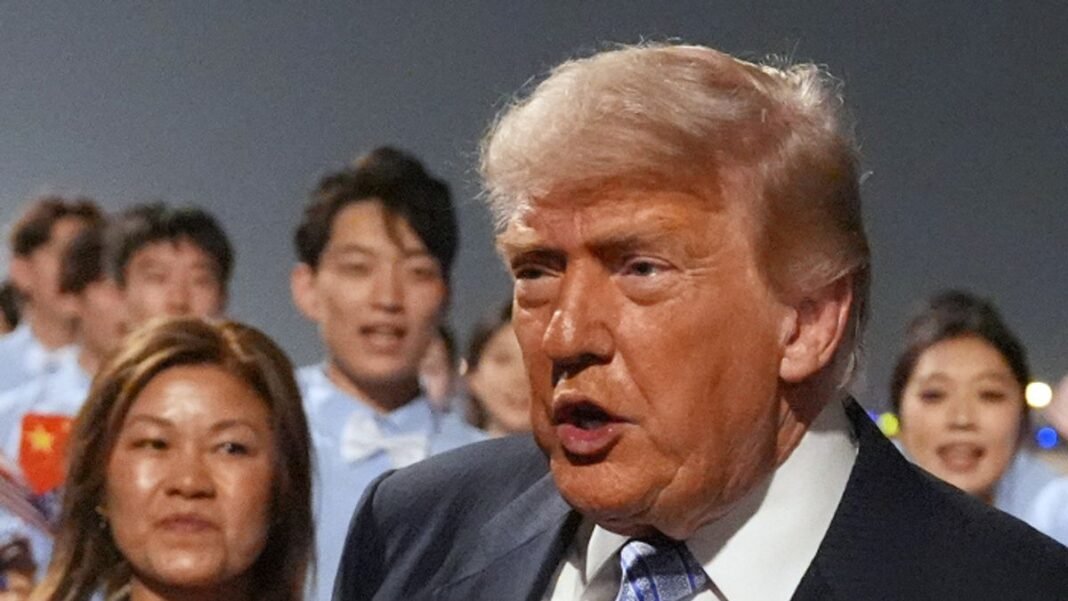
President Donald Trump commenced his official visit to China with strong criticism following the leak of a classified US intelligence report indicating Iran’s sustained missile capabilities despite previous military actions. The report, highlighted by The New York Times, revealed that Iran had regained control over the majority of its missile launchers, storage facilities, and underground sites, contradicting earlier claims by Trump and Defense Secretary Pete Hegseth.
Despite assertions from Trump and Hegseth that Iran’s military had been severely crippled by Operation Epic Fury, recent intelligence assessments showed that Iran had restored access to a significant portion of its missile infrastructure. Trump responded vehemently on social media, denouncing the media for allegedly aiding the enemy by reporting false information that could boost Iran’s morale.
Evidently, Iran’s military strength remains more robust than public statements from the White House suggested. The latest findings unveiled that a substantial portion of Iran’s missile sites and stockpile are operational, contradicting previous claims of complete destruction.
In light of the conflicting reports, White House spokeswoman Olivia Wales maintained the stance that Iran’s military had been significantly weakened, emphasizing the blockade’s economic impact on Iran. While the US continues to assert military dominance, the reality on the ground paints a different picture, with Iran appearing resilient and prepared for prolonged conflict.
The ongoing discord between public declarations and factual intelligence underscores the complexity of the situation, with Trump’s administration facing scrutiny over its handling of Iran’s military capabilities. As tensions persist, the narrative surrounding Iran’s military strength remains a point of contention, shaping the geopolitical landscape in the region.