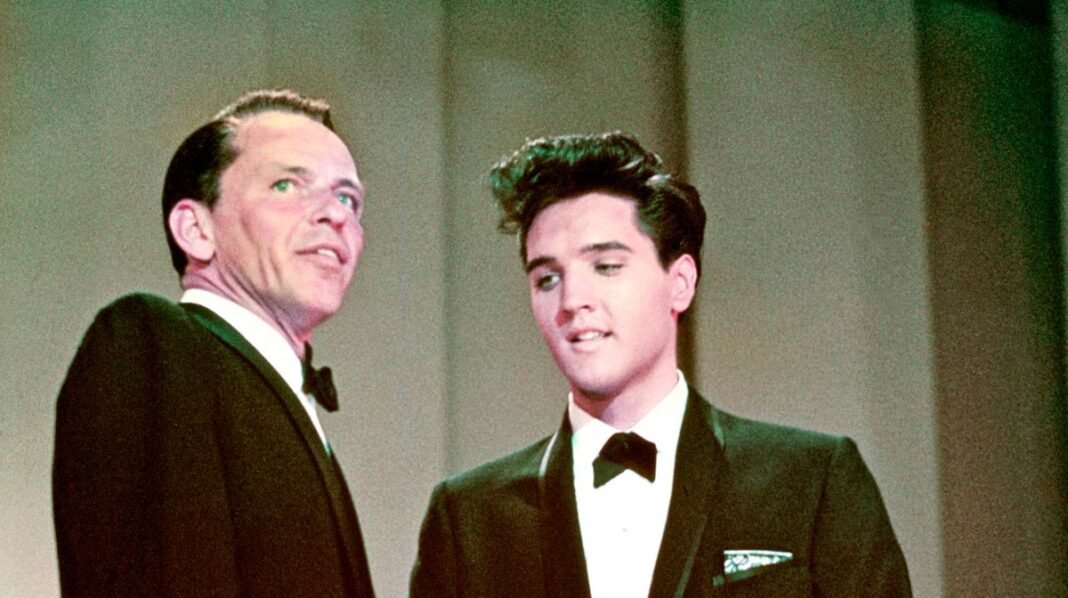
In a monumental clash that captivated the music industry, Frank Sinatra, renowned as the King of the Rat Pack, prepared to join forces with Elvis Presley on his 1960 TV special. Sinatra, a legendary figure in both music and film, had expressed disdain for rock and roll in a magazine article, provoking a response from Elvis, who admired Sinatra and viewed rock and roll as a natural evolution in music.
According to author Matt Thorne, had this exchange occurred in modern times, Sinatra’s criticism might have been a provocative tweet, while Elvis’s response akin to a thoughtful Instagram post. Sinatra’s concern stemmed from the fear of losing his long-standing dominance in the music industry, particularly among his female fan base, which had started to dwindle after his publicized marital affairs.
Elvis, on the other hand, harbored no ill feelings towards competition, believing there was room for everyone in show business. Beyond musical rivalry, tensions also brewed due to contrasting military experiences, with Sinatra’s wartime exemption sparking controversy.
Rumors of a shared romantic interest, actress Juliet Prowse, added another layer of complexity to their dynamic, further fueling the underlying friction. The showdown culminated in a high-stakes television appearance where Sinatra paid a significant sum to have Elvis featured, showcasing their contrasting styles and fan reactions.
Despite their differences, both artists navigated their careers uniquely, with Elvis facing challenges in his later years while Sinatra continued to thrive as a live performer. Their diverging trajectories shed light on the complexities of fame and rivalry in the music industry.
In a separate narrative, the contentious relationships between Chuck Berry and Keith Richards, Taylor Swift and Kanye West, as well as Paul McCartney and Diana Ross, underscore the enduring nature of rivalries and collaborations in the music world.
The intricate dynamics between these iconic figures offer a glimpse into the intricate tapestry of the music industry, where talent, egos, and personal histories intersect to shape legacies that transcend generations.