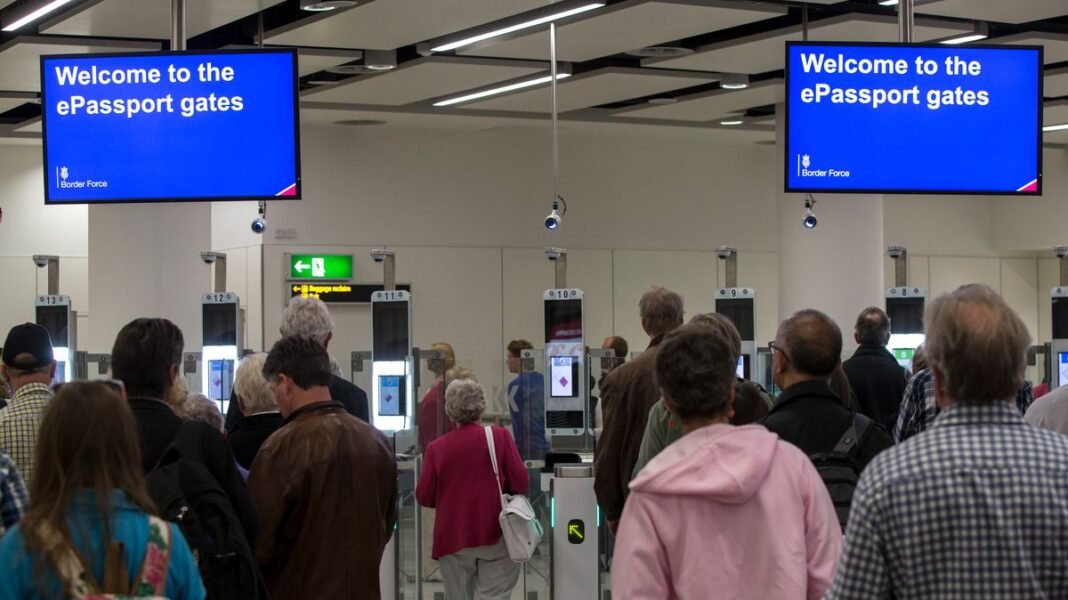
Summer of 2026 appears to hold uncertainty for travelers as they face potential disruptions due to jet fuel issues and new regulations for Brits entering the European Union. Despite this, a lesser-known provision in the EES regulations could offer relief for Brits traveling to Europe, potentially being activated if airport queues in Europe become excessively long.
Certain countries are taking measures to address the chaos caused by EES implementation. Greece, for example, has reverted to manual passport stamping to streamline the entry process. However, reports suggesting that Italy and Portugal might adopt similar measures have been dismissed by Brussels.
In instances of “exceptional circumstances,” exemptions within the EES system could be triggered to alleviate pressure on EU airports if the new procedures overwhelm them. The European Commission has indicated that EU countries could suspend EES operations for up to an additional 150 days following the April 10 implementation date.
This suspension could last for up to six hours in cases of excessive waiting times. Member States are advised to use this option only when absolutely necessary and for the shortest duration possible, with biometric data registration being halted during partial suspensions and entirely during full suspensions.
Since the introduction of the new system, there have been conflicting reports on its efficiency. Some travelers have experienced longer queues, attributing it to slow software and technical malfunctions, while others have noticed minimal impact on their airport experience.
In the near future, the European Travel Information and Authorisation System (ETIAS) will be enforced, requiring Brits to obtain pre-travel authorization before entering the EU. The initial cost was set at €7, but it has now been increased to €20, affecting travelers aged between 18-70 who must apply for authorization prior to their journey once the system is operational.