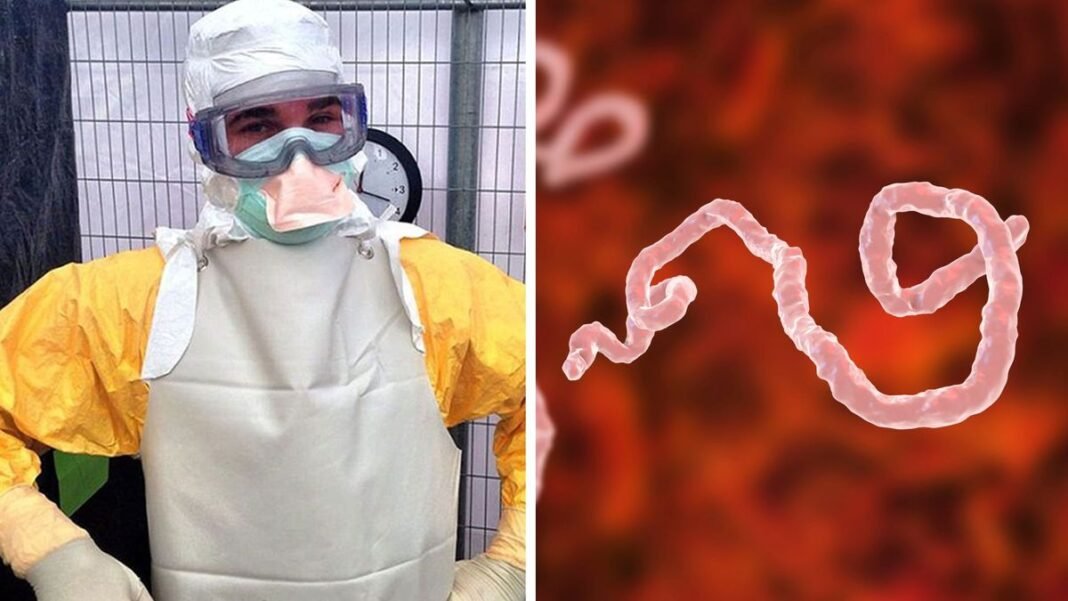
Health authorities are closely monitoring a recent Ebola outbreak in Africa that has spread internationally. The Ebola virus, known for causing symptoms like fever, vomiting, and severe bleeding, can be fatal within a day of infection. Reports from the health ministry in eastern Congo indicate over 130 fatalities and more than 500 suspected cases in this outbreak.
An American individual, who contracted the virus while in the DR Congo, has been confirmed as a case and transferred to Germany for treatment. The Centers for Disease Control and Prevention (CDC) stated that the infected American is receiving care at a specialized isolation unit in Berlin. Additionally, six other individuals identified as high-risk contacts will be relocated to Europe for strict quarantine measures.
In light of this health crisis, Dr. Craig Spencer, an American doctor who previously battled Ebola during the 2014 outbreak, expressed concerns about the current situation. Dr. Spencer, who survived the virus after treating patients in Guinea, emphasized the severity of the current outbreak based on his experience.
Reflecting on his own encounter with Ebola, Dr. Spencer, who now serves in emergency medicine and as a public health professor, shared his thoughts on the challenges posed by the outbreak and the impact on response efforts. He also highlighted the implications of the United States’ decision to withdraw from the World Health Organization, a move criticized by US Secretary of State Marco Rubio for potentially hindering global health responses.
Despite the challenges, efforts are underway to address the outbreak, with the US committing financial aid to support the establishment of Ebola treatment centers in the DR Congo. However, concerns persist about the ramifications of reduced support for international health organizations in combating public health crises like Ebola.