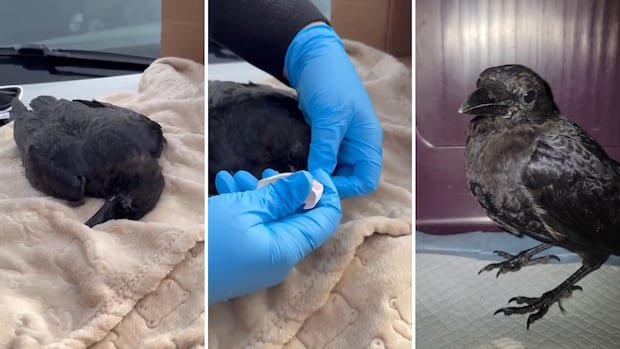
In downtown Prince George, B.C., an animal welfare group is providing nasal naloxone to crows suspected of ingesting toxic substances left accessible outdoors. The Good Caws Crow Rescue Society (GCCRS) has shared videos of their volunteers administering naloxone to unresponsive crows, who then regain alertness and the ability to fly.
Dayna Slater from GCCRS mentioned that the affected crows are concentrated in an area known for illicit drug activity. She expressed concern over the increasing instances of suspected drug overdoses among the crows, with more than a dozen cases recorded this year, a significant escalation from previous years.
Describing the symptoms observed in affected crows, Slater explained that they exhibit signs such as outstretched wings, closed eyes, slowed heartbeat, and unresponsiveness, while some display brown liquid foam from their beaks. Despite some casualties, most crows have been successfully released after recovery within 24 hours.
Dr. Kaitlyn Liukaitis from Birchwood Veterinary Clinic, who treated some of the crows, confirmed that the symptoms align with toxic drug overdoses. She noted that using naloxone to reverse these symptoms is a common practice in veterinary care for various animals.
The rise in drug toxicity in British Columbia has led to multiple public warnings, with Prince George experiencing a surge in overdose calls, resulting in a constant presence of sirens downtown, where the affected crows are found. As harm reduction measures face political opposition, access to safer alternatives for individuals struggling with addiction is becoming more challenging.
Collaborating with harm reduction groups, Slater emphasized the importance of identifying and aiding crows experiencing suspected overdoses. She highlighted the need for covered garbage cans to prevent crows from accessing harmful substances disposed of in open areas, emphasizing the impact of human actions on the surrounding environment.