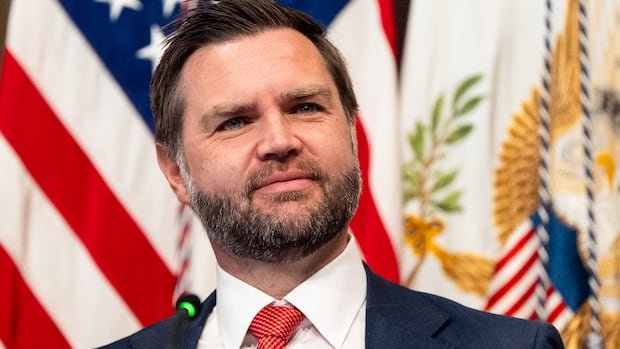
U.S. Vice-President JD Vance shared his perspective on the recent trade agreement with Canada during a fundraising event on Wednesday. Vance mentioned that Prime Minister Mark Carney aimed to appear tougher than U.S. President Donald Trump, while acknowledging Conservative MP Jamil Jivani as a supportive advocate for Canada.
Speaking at a private function in Southampton, N.Y., Vance described Carney as a “very sweet guy” with whom he gets along quite well. However, Vance remarked on Carney’s attempt to outshine Trump, stating that despite Carney’s portrayal of the deal as a victory for Canada, certain concessions were made behind the scenes. He credited Jivani, a random MP with a positive relationship with the U.S., as an effective advocate in the negotiations.
Vance also discussed Conservative Leader Pierre Poilievre, labeling him as a “non-entity” in the trade negotiations. The Vice-President mentioned that the White House and his office had not responded to requests for comments on the matter.
The temporary postponement of new tariffs on Canadian products was announced by Trump following a discussion with Carney and weeks of intense bilateral talks. Trump expressed satisfaction with the deal, emphasizing the positive relationship between the two countries.
Reports suggest that the agreement will involve reduced tariffs on Canadian steel, aluminum, and automobiles by the United States in exchange for Canadian liquor returning to store shelves. Details on other aspects of the deal remain unclear, although Trump mentioned the elimination of tariffs on American farmers.
Vance highlighted the objective of the negotiations as influencing Canada’s behavior towards a more favorable stance, aligning with Trump’s vision. The historically strained Canada-U.S. relationship faced challenges due to Trump’s policies, with former Prime Minister Trudeau’s resignation being partially attributed to these tensions.
Vance emphasized the involvement of Jivani in the negotiations, noting the MP’s strategic influence. Jivani’s diplomatic efforts and advocacy for Canada’s interests have sparked mixed reactions within the Conservative Party, with Poilievre publicly expressing concerns over the negotiation approach.
In conclusion, Vance praised Jivani’s dedication to Canada’s success, highlighting their longstanding friendship and collaborative efforts in the trade talks. Jivani’s engagement with U.S. officials and his commitment to securing a favorable deal for Canada have been pivotal in shaping the ongoing negotiations.