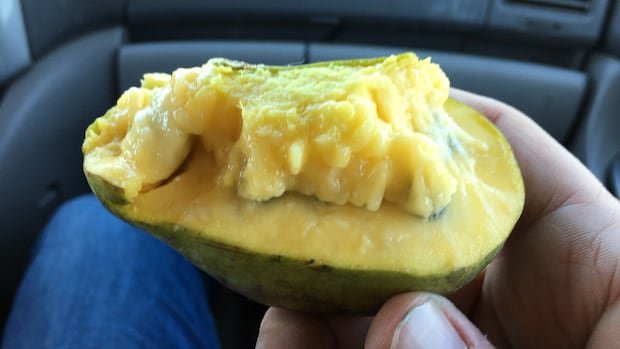

Many are unaware that the exotic-tasting pawpaw fruit grows in Canada. Chef Tawnya Brant believes it’s a delightful experience if you manage to taste it.
Brant, the owner of Yawékon Foods and host of APTN’s One Dish One Spoon, describes pawpaws as a blend of banana, mango, and pineapple flavors with a creamy texture that turns caramel-like as it ripens.
She compares pawpaws to a peculiar, oval-shaped alien banana with large seeds inside, highlighting their unique characteristics.
Pawpaws have a long history in North America, cultivated by Indigenous communities before being displaced due to land clearing. While still found in the wild and select orchards in regions like southern Ontario, B.C., and Quebec, their limited shelf life and susceptibility to bruising hinder widespread commercial availability.
Brant’s introduction to pawpaws occurred when a friend shared some from her mother’s garden. She reminisces about how the Haudenosaunee transported pawpaw trees along the eastern seaboard for generations due to their fondness for the fruit.
Thomas Mathias, a farmer from Ontario’s Niagara region, experimented for 11 years before successfully growing pawpaws on his farm. His method involved using llama manure to attract pollinators, ultimately leading to a fruitful harvest.
Mathias and his sister, Beth Secord, now cultivate pawpaws on their farm, with Secord praising the fruit for its sweetness and freshness. They have noticed a growing interest in pawpaws, with customers returning for more and spreading the word.
Secord envisions a resurgence of pawpaws and hopes to see more people planting pawpaw trees in their yards. She emphasizes the fruit’s versatility in culinary creations but advises caution due to its intense flavor and the toxicity of the skin and seeds.
Brant, with aspirations to incorporate pawpaws into her cooking, views them as a cherished annual gift she looks forward to sharing with others.