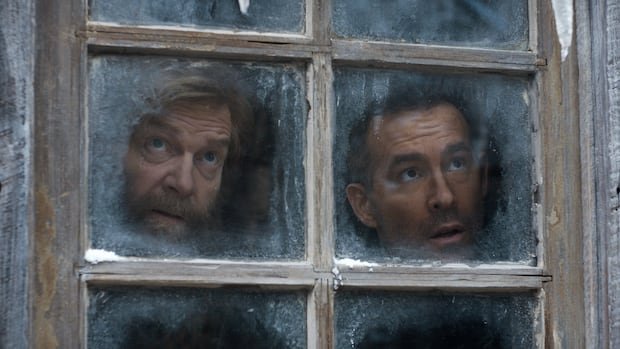
In a surprising revelation, the movie “Mayday” delves into the notion that recognizing the humanity in others can be a challenging feat, shedding light on the complexities of human nature. The storyline follows an aging ex-KGB agent named Nikolai, portrayed by Kenneth Branagh, who defies stereotypes by displaying empathy and altruism towards a U.S. navy pilot named Troy, played by Ryan Reynolds. As Nikolai risks his life to protect Troy, the film challenges the audience’s preconceived notions about Russian characters during the Cold War era.
The movie unfolds with a blend of action and comedy, showcasing the dynamic between Branagh’s charismatic yet kind-hearted character and Reynolds’ role as the witty sidekick. The directors, Jonathan Goldstein and John Francis Daley, skillfully capture the essence of the narrative, balancing intense action sequences with moments of camaraderie between the characters.
“Mayday” succeeds in breaking away from traditional propaganda narratives by presenting a nuanced portrayal of both American and Russian characters. While acknowledging the historical tensions of the Cold War, the film prompts viewers to question the simplistic dichotomy of good versus evil that often characterizes such narratives.
Through the interactions between Nikolai and Troy, “Mayday” invites audiences to reconsider their perceptions of the “enemy” and challenges the notion of absolute moral superiority. By exploring themes of empathy and understanding across cultural divides, the film encourages viewers to reflect on the shared humanity that transcends geopolitical conflicts.
Overall, “Mayday” offers a thought-provoking take on Cold War dynamics, presenting a mainstream popcorn film that goes beyond conventional tropes to explore the complexities of human relationships in times of conflict.