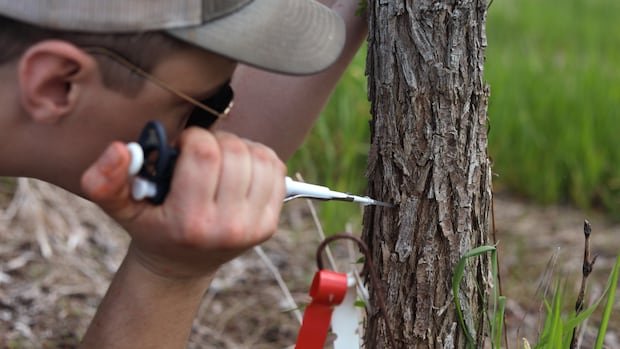
Scientists in Vermont have been conducting an experiment to introduce Dutch elm disease to numerous trees during the summer. This initiative, led by the U.S. Forest Service and the Nature Conservancy, aims to assess the potential resistance of a new generation of elms, derived from survivors of the disease, to the fungus transmitted by bark beetles that has been devastating elm populations in the United States and Canada for many years.
The ultimate objective is to eventually restore areas where majestic elms once flourished, adorning city streets and thriving along riverbanks. Gus Goodwin, a senior conservation planner at The Nature Conservancy, described the significant losses of trees over the years as devastating.
The outcomes of the Vermont experiment, along with similar efforts in Canada, will determine if a strain of trees resistant to Dutch elm disease (DED) can be developed. These research endeavors are crucial as the disease poses a growing threat in new regions.
In the past, infected elms were promptly removed to control DED. However, this practice inadvertently impacted the natural tolerance to the disease by eliminating trees that could withstand it. Alison Morrison, a manager at the University of Guelph arboretum, highlighted the unintended consequences of this approach.
The Elm City of Fredericton, once renowned for its “City of Stately Elms,” witnessed a drastic reduction in its elm population due to the disease outbreak in the 1960s and 70s. Efforts to combat DED have become increasingly urgent as it continues to affect various regions, such as Edmonton and Saskatoon.
Morrison emphasized the importance of preserving mature trees for their environmental benefits, such as providing shade and aiding in stormwater absorption. Restoring elms in communities can contribute to biodiversity and resilience in the face of climate change challenges.
Ongoing projects in North America, including the Elm Recovery Project in Guelph and initiatives in Fredericton, focus on enhancing resilience against DED through breeding and cloning disease-resistant trees. These long-term endeavors require patience and dedication to ensure the survival and proliferation of disease-resistant elms.
If successful, these projects could enable elms to coexist with DED, similar to the situation in Europe where elms have evolved to withstand the disease with minimal negative impacts. While natural evolution of elms in Canada is possible, the expedited efforts aim to accelerate this process and ensure the survival of these iconic trees for future generations.