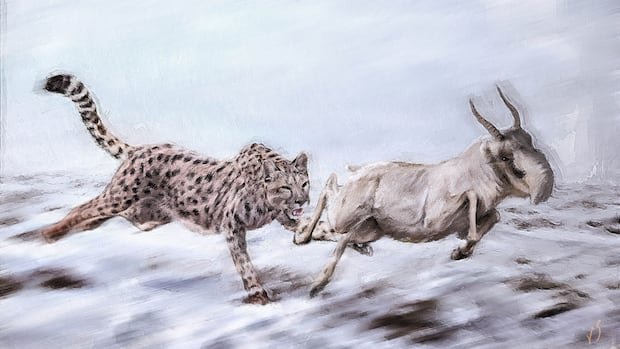
In the Bluefish Caves and a mine site in northern Yukon, bones were initially believed to be from an ice-age puma or cougar. However, DNA analysis from the University of California revealed a different story. The analysis, conducted by Molly Cassatt-Johnstone, a lab technician fresh out of her undergraduate studies, marked the Yukon bones as a significant discovery in her career.
Yukon paleontologist Grant Zazula vividly recalls the surprising message he received one evening regarding the bones: they were not cougars but cheetahs. This revelation marked a shift in the understanding of the ancient creatures inhabiting the region.
The identification of a Yukon Miracinonyx, also known as the extinct American cheetah, by Cassatt-Johnstone led to the publication of a research paper in Current Biology. The paper sheds new light on the ice-age cat’s dietary habits and geographical range, marking a breakthrough in paleontological studies.
The study challenged previous beliefs that the American cheetah hunted pronghorns on grassy plains. Finding these creatures in the Arctic tundra puzzled researchers, as there were no pronghorns in Beringia, the land connecting Asia and North America.
To unravel this mystery, researchers, in collaboration with experts from Canada and the U.S., utilized stable isotope analysis. By examining bone samples from the cheetah, researchers discovered a unique dietary preference for fish, a behavior uncommon among ancient and modern feline species.
This reliance on salmon as a primary food source in the Yukon provided insights into the ecosystem dynamics and survival strategies of the cheetahs in the region. The study also revealed genetic similarities between Miracinonyx and North American pumas, suggesting a low genetic diversity that may have contributed to their eventual extinction.
The presence of fishing felines in the Arctic region prompted Zazula to propose renaming the unique northern population from ‘American Cheetah’ to ‘Yukon Cheetah.’ This discovery underscores the ongoing potential for new scientific revelations from even the smallest bone findings in the Yukon, showcasing the ever-evolving nature of paleontological research.