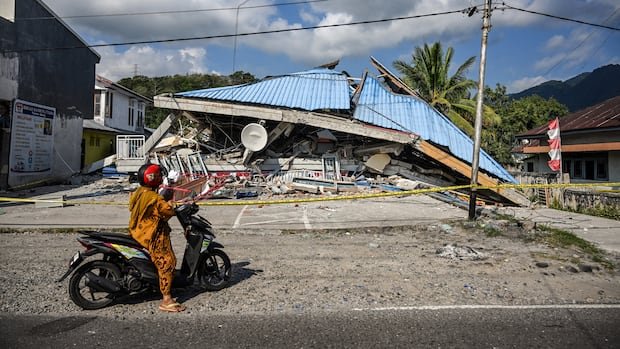
Thousands of individuals in need of assistance awaited help on Flores Island in Indonesia following a severe earthquake that resulted in a death toll of at least 68 and left over 200 injured. Many residents on the island spent the day mourning the victims and anticipating aid to reach communities that were still inaccessible due to the quake’s impact.
The earthquake caused extensive destruction, with collapsed buildings, shattered homes, and blocked roads with debris like trees and boulders. Residents like Rasyid Jafar from the village of Reo expressed the urgent need for essentials such as food, medicine, and clean water, as their homes were reduced to rubble.
President Prabowo Subianto called for prayers during Indonesia’s Independence Day ceremony for the affected individuals in East Nusa Tenggara and other parts of the country. The disaster damaged over 4,500 homes, displaced 19,000 people into temporary shelters, injured 213 individuals, and affected numerous health facilities, schools, and places of worship.
The National Disaster Management Agency reported 1,576 aftershocks as of Monday, with some still being felt by residents. The governor of the province declared a 14-day state of emergency to manage the crisis effectively.
Aid operations were ongoing, with thousands of people camping outside damaged homes on Flores, waiting for assistance. The deployment of military and police personnel along with the distribution of aid faced logistical challenges, delaying deliveries to severely impacted communities.
Emergency field hospitals were set up in Ruteng to treat earthquake victims, as rescue teams continued their search for any remaining victims. Remote areas like Palue Island, close to the earthquake’s epicenter, faced challenges in receiving aid due to blocked roads caused by landslides.
Indonesia’s susceptibility to earthquakes and volcanic activities due to its location on the Pacific “Ring of Fire” has led to devastating incidents in the past. The recent earthquake on Flores Island revived memories of past disasters, such as the 1992 earthquake and tsunami that claimed thousands of lives and subsequent events in 2004 and 2018 that resulted in significant casualties.
The region is known for its vulnerability to natural disasters, emphasizing the ongoing need for preparedness and swift response to mitigate the impact on communities.