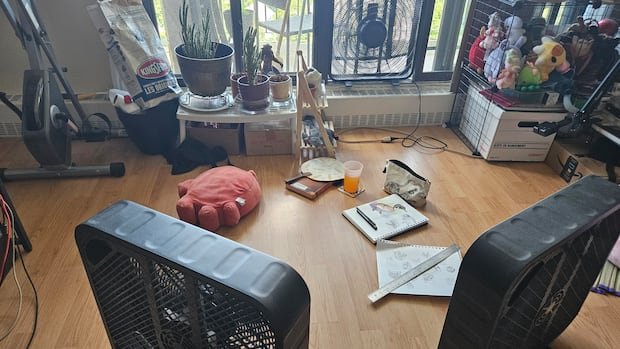
Since a heatwave struck mainland Nova Scotia recently, Miriam Williams and her husband have resorted to running six box fans in their high-rise apartment to alleviate the oppressive 40 C feels-like temperature. Williams expressed frustration at the limited options available to combat the extreme heat, describing the situation as unbearable.
In response to the escalating risks posed by extreme heat, Williams participated in a rally organized by tenant advocacy group ACORN at the Halifax Common splash pad, joining a nationwide call for government intervention. The primary demands varied across regions, with a common focus on implementing indoor temperature limits for rental properties and providing cooling subsidies.
Williams highlighted the challenges faced by vulnerable individuals, emphasizing the strain on children and elderly residents within her building. Concerned about the lack of governmental action during the ongoing heatwave, she stressed the urgency of addressing the situation.
Christian Salmeron, another rally participant, shared his struggle to find relief from the heat, resorting to seeking air-conditioned spaces to work. Despite the absence of explicit bans on window air conditioners in his building, Salmeron noted the financial barriers preventing tenants from installing them.
Similarly, Williams echoed the sentiment, revealing that although she owns a portable air conditioner, she hesitates to use it due to the associated high costs. The protesters advocated for a province-wide indoor temperature cap and urged the government to prohibit landlords from restricting certain types of air conditioners while providing financial aid for their purchase.
The lack of standardized heat-related death reporting in Canada was highlighted, with a coroner’s report from British Columbia suggesting 619 deaths in the province during the 2021 heatwave. Notably, New Westminster in B.C. emerged as the first city council in Canada to pass a bylaw amendment mandating rental units to maintain a safe indoor temperature averaging 26 C during specified hours.
Addressing concerns about building regulations, the provincial government emphasized the role of building owners in setting rules regarding supplementary air conditioning units. The statement reiterated the obligation of landlords to maintain safe rental properties, with avenues for tenants to escalate concerns through the residential tenancies program.
Sarah Brannen, spokesperson for the Halifax Regional Municipality, emphasized the city’s commitment to preparing for extreme heat events through the HalifACT climate action plan. Efforts are underway to explore strategies for mitigating indoor heat risks and ensuring safe indoor temperatures.
The community’s response to the heatwave underscores the pressing need for proactive measures to address extreme heat challenges and safeguard vulnerable populations.