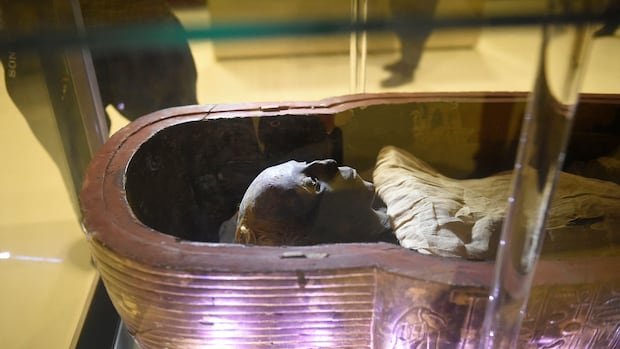
Researchers have discovered an unexpected global market for preserved human remains sold online, raising concerns about potential health risks associated with this niche hobby. According to a study published in the International Journal of Cultural Property, lead author Kirsty Squires and her team examined 128 online posts from 2015 to 2025 showcasing and advertising human and animal remains for sale.
The study revealed that mummified heads, hands, and feet were commonly featured in these posts. Squires, a bioarchaeology professor at the University of Staffordshire, warned that mummified body parts may harbor dormant microorganisms like bacteria, fungi, and yeast, which could pose health hazards if mishandled.
Proper Handling of Mummies
Squires noted that many online images displayed signs of deterioration due to inadequate storage conditions. Unlike in museums where mummies are stored in controlled environments, individuals keeping such remains in non-regulated spaces like homes or garages may unwittingly expose themselves to harmful microorganisms.
Improper handling of mummified remains can release fungal spores or bacteria into the air, potentially affecting individuals, particularly those with compromised immune systems. Additionally, some mummified body parts may contain toxic substances such as arsenic and mercury from historical embalming practices.
Risks and Historical Precedents
While the study did not report any specific cases of illness resulting from handling online-sold human remains, historical incidents serve as cautionary tales. For instance, in 1973, conservation scientists died after inhaling common mould spores from a 15th-century tomb, while speculation surrounds the death of Lord Carnarvon in 1923 after entering King Tutankhamun’s burial chamber.
James Scott, a public health professor, emphasized ethical concerns over health risks, suggesting that collectors who handle these items with care may face minimal danger. The study also highlighted the presence of Canadian individuals engaging in the online trade of human remains, with calls for stricter regulations on such transactions.
Regulation and Ethical Considerations
Despite existing regulations on shipping human remains, loopholes allow sellers to evade scrutiny by mislabeling packages. This lack of oversight poses risks to postal workers and anyone handling damaged packages containing human remains.
As debates continue on the ethics of trading human remains, efforts are underway to address the commodification of ancestral bodies. Proposals to ban the online sale of human remains, as seen in the U.K., are gaining traction, prompting calls for similar legislation in Canada to curb the trade of mummified human remains.