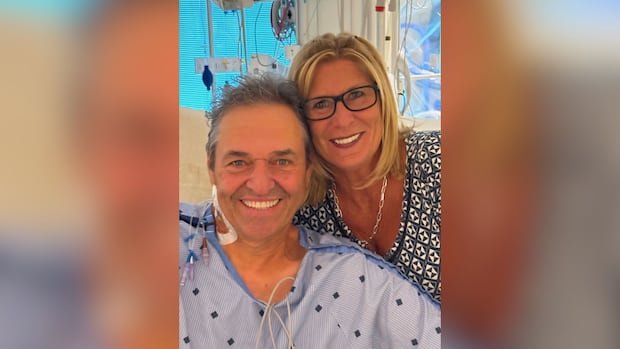
A 64-year-old man from Quebec has made history by receiving a regenerated liver in North America. This breakthrough technology at Montreal’s CHUM could potentially increase the availability of livers for transplant by dozens in its initial year. Gérard Landry, a resident of Nouvelle in Quebec, had been struggling with liver issues for over 15 years, leading to cirrhosis and liver cancer.
Before his liver transplant surgery, Landry was informed by his doctor about a new machine called Liver Assist that regenerated the organ. This innovative technology allows doctors to evaluate and treat donated livers outside the body before transplantation, making it possible to use organs that were previously deemed too risky.
Dr. David Hénault, a liver transplant specialist at CHUM, conducted Landry’s operation, which had been in preparation for about three years. The Liver Assist system functions by connecting a donated liver to a machine that circulates an oxygen-rich fluid through it to reverse damage caused by oxygen deprivation. The technology then switches to a blood-based solution to assess the liver’s functionality in conditions mimicking the human body.
The CHUM, which performs around 70 liver transplants annually, collaborated with Transplant Québec to identify potentially recoverable livers using the new technology. It is estimated that the machine could make an additional 20 to 24 livers available for transplantation in its first year, with the potential for further growth as the technology becomes more widespread.
Studies have indicated that the technology can reduce complications, reoperations, and hospital stays for suitable patients. Landry’s post-transplant progress was promising, with improved blood work shortly after the operation, indicating a successful outcome.
As Landry continues his recovery in Montreal, he looks forward to returning to Gaspésie once he is well. He emphasizes the importance of organ donation discussions, underscoring that advanced technology can only be effective if donor organs are available. Landry’s optimistic outlook and successful transplant experience serve as a beacon of hope for the future of organ transplants.