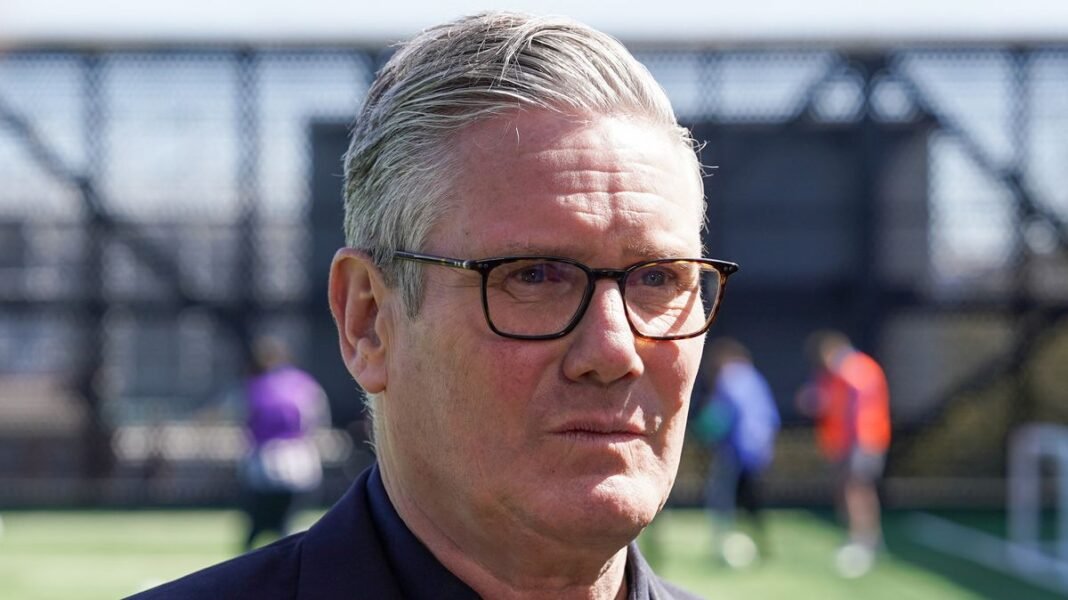
Keir Starmer has reaffirmed his commitment to fulfilling his pledges by 2029, shrugging off queries about his leadership ahead of the upcoming crucial elections.
As Downing Street braces for potentially unfavorable outcomes in England’s local elections and the devolved administrations of Scotland and Wales, experts anticipate Labour facing significant losses, potentially up to 1,850 councillors in England – more than half of those being defended by the party – and a potential loss of power in Wales.
During an interview on the BBC’s Today program set to air on Saturday, Mr. Starmer was asked about the possibility of stepping down if the election results turn out as poorly as feared. In response, he emphasized being elected in July 2024 on a platform of change for a five-year term with a resounding victory, stating that his performance would be evaluated at the end of that period based on his delivery of promises.
Addressing critics who believe a change in leadership would yield better outcomes for the party, Mr. Starmer pointed to ongoing global challenges such as the Iran war crisis and economic repercussions. He stressed the urgency of the current situation and the need for strong leadership in navigating volatile and dangerous world events.
Regarding the controversy surrounding the Peter Mandelson scandal, the Prime Minister reiterated his acknowledgment that the appointment of the Labour figure as the UK’s ambassador to Washington was a mistake on his part, expressing regret and taking responsibility for the error.
Nevertheless, Mr. Starmer criticized a Tory-led parliamentary motion this week seeking to refer him to the Privileges Committee over claims of misleading the Commons on the scandal. He accused political rivals of seeking to undermine the government’s initiatives, emphasizing the government’s efforts in improving workers’ rights, renters’ rights, and combating child poverty.
The political landscape this week was marked by attempts to challenge the government’s actions, but Mr. Starmer acknowledged his error in judgment while standing firm on his commitment to driving meaningful change and delivering on his mandate.