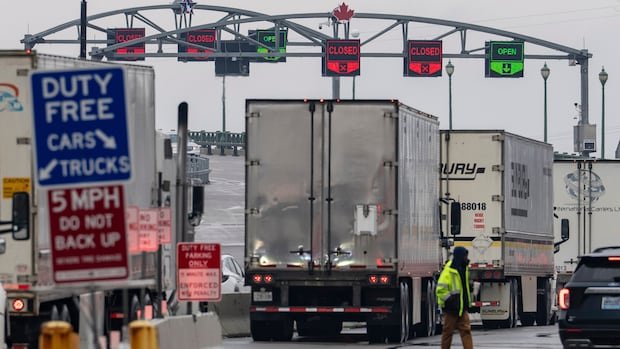
Under the leadership of President Trump, enforcement actions on cross-border cargo have significantly increased, causing delays and financial implications that act as a deterrent to trade, according to shippers.
As a protective measure, there has been a surge in freight screening and penalties along the U.S.-Canada border, reflecting a stricter customs approach in the United States, as noted by industry insiders.
Breanna Leininger, overseeing U.S. operations at Pacific Customs Brokers in Vancouver, described the shift as substantial, citing a tenfold increase in the documentation required for goods shipped compared to previous years.
She explained that customs now scrutinize a larger number of shipments, with a more detailed examination becoming a daily occurrence, contrasting with the occasional checks in previous years.
To demonstrate compliance with trade agreements and product classifications, importers are now required to provide a more extensive paper trail, including labor and manufacturing records, with the level of detail and proof changing frequently.
Leininger pointed out the evolving demands, stating that the information requested continually changes, making it challenging for importers to keep up.
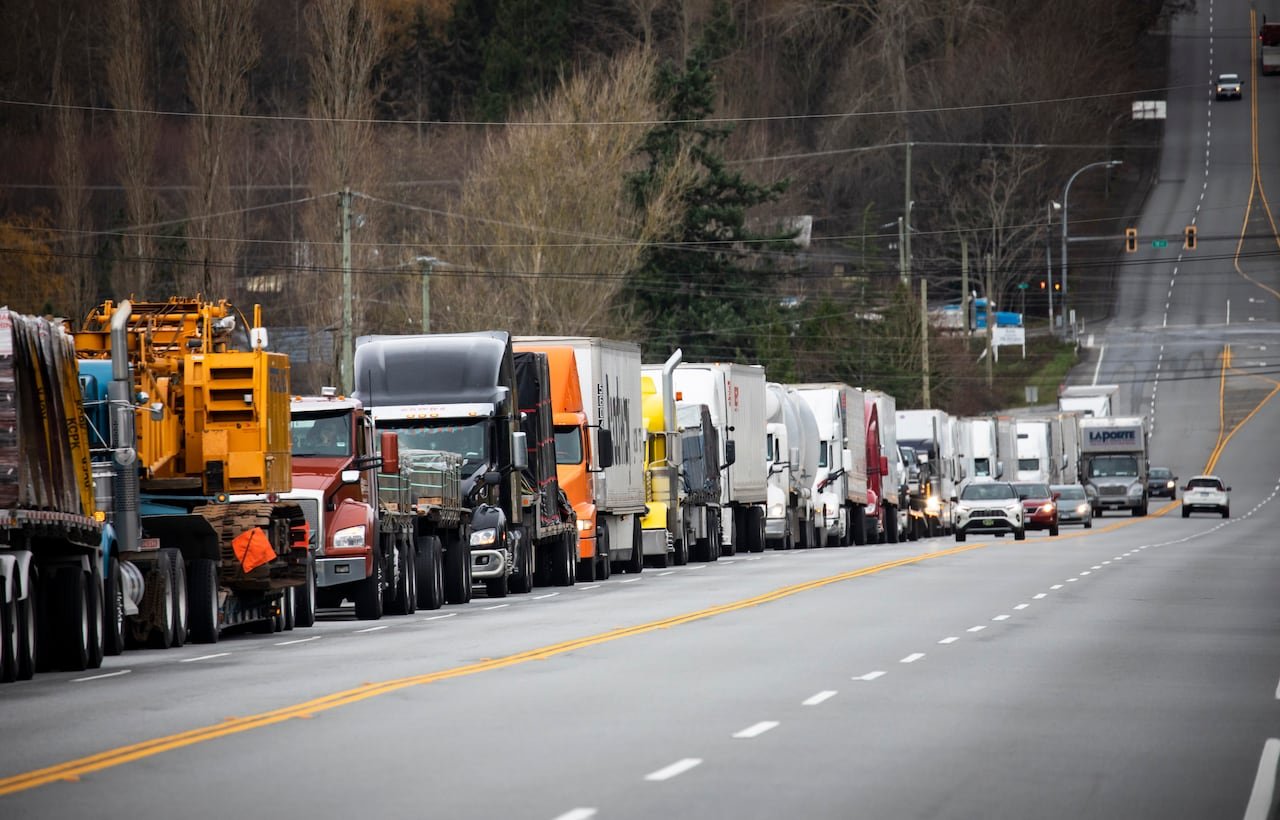
Commercial trailers wait to enter the U.S. at a border crossing in Surrey, B.C., on Dec. 1, 2021. (Ben Nelms/CBC)
Data supports the narrative of rigorous enforcement measures.
U.S. Customs and Border Protection records indicate a projected 26% increase in audits for this year compared to 2024.
An audit involves reviewing an importer’s records to confirm adherence to tariff classifications, customs valuations, and trade agreements like the Canada-United States-Mexico Agreement.
In the first half of this year, U.S. customs authorities collected $70.6 million US in trade penalties by late July, marking a 169% increase from the total penalties in 2024.
This sum for the first half of the year also reflects a 53% rise compared to the entire year of 2025.