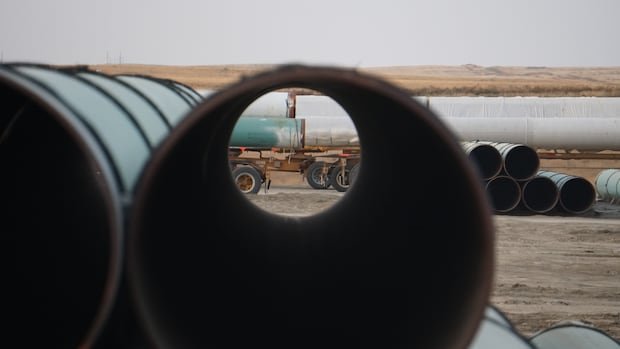
President Donald Trump of the United States has hinted at the revival of a Canada-U.S. oil pipeline project, Keystone XL, which was previously abandoned by past administrations. However, experts in the industry suggest that this statement may be more politically motivated than related to the petroleum sector.
In a recent social media post, just before new tariffs on Canadian goods were set to take effect, Trump announced a temporary halt on tariffs and a new agreement with Canada. He mentioned the potential revival of the Keystone XL Pipeline, which had been discontinued during the tenure of his predecessor, Joe Biden.
Prime Minister Mark Carney has not directly addressed Trump’s comments in response so far.
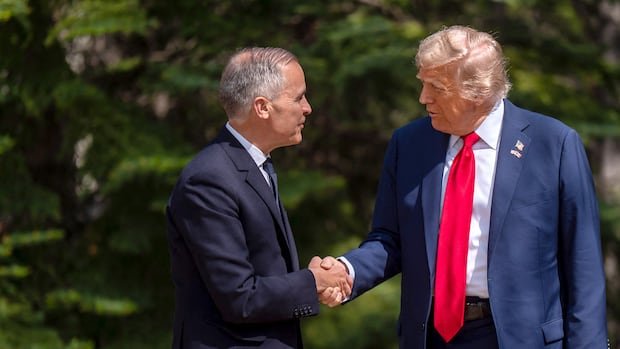
The U.S. President has decided to pause 50% tariffs on Canadian goods, citing a new trade deal with Canada that is in progress. Prime Minister Mark Carney acknowledged the progress made in the negotiations.
Trump’s Signal on Keystone XL Pipeline
Dennis McConaghy, a former executive at TransCanada Corporation, now known as TC Energy, views Trump’s signal on Keystone XL as a strategic move in the ongoing trade negotiations. Since February 1, 2025, Trump has imposed tariffs on various Canadian sectors, asserting the U.S. does not depend on Canadian imports, except for specific commodities like oil.
Despite Trump’s previous stance on Canadian goods, McConaghy sees the Keystone XL reference as a positive development. However, experts like Carlo Dade from the University of Calgary warn of challenges in reviving the project due to political and environmental hurdles.
Valérie Beaudoin, part of the Advisory Committee on Canada-U.S. Economic Relations, believes that approving the Keystone XL project may be easier for Carney than for Trump, considering potential future political shifts.
Rory Johnston, founder of Commodity Context, views Trump’s remarks as a direct response to Biden’s policies, suggesting challenges in reanimating the Keystone XL given the current market dynamics.
Ottawa’s Interest in Keystone XL
Most of Canada’s crude oil exports currently go to the U.S., with a slight decline post the Trans Mountain pipeline expansion in 2024. The