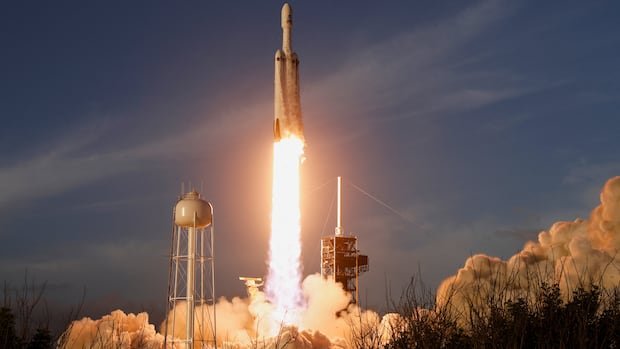
NASA has initiated a new mission to explore key mysteries in astrophysics and cosmology by launching its flagship astronomical observatory, the Nancy Grace Roman Space Telescope. The $4 billion project was launched from NASA’s Kennedy Space Center in Cape Canaveral, Fla., using a SpaceX Falcon Heavy rocket. The telescope’s primary goals include investigating dark energy, dark matter, testing gravity, and searching for exoplanets beyond our solar system.
The telescope, originally part of a spy satellite program under the National Reconnaissance Office, was repurposed for cosmic exploration after the program was terminated. The Roman telescope will orbit beyond the moon at Lagrange Point 2, approximately 1.6 million kilometers from Earth. Named after NASA’s first chief astronomer, the telescope is expected to provide high-resolution images within the next 90 days.
NASA officials anticipate that the Roman Space Telescope will become a well-known instrument for discovery, alongside the James Webb Space Telescope and the Hubble Space Telescope. Roman is designed to survey the cosmos rapidly, covering the Milky Way galaxy in a month, a task that would take Hubble a century to complete.
The launch of the telescope, which occurred ahead of schedule, received support from Congress despite attempts by the Trump administration to cancel or reduce its funding. The mission aims to deepen our understanding of dark energy, dark matter, and exoplanets by creating a comprehensive 3D map of the universe, covering over two billion galaxies.
By utilizing Roman’s capabilities to study dark matter’s gravitational effects and dark energy’s cosmic expansion, scientists hope to unravel these enigmatic phenomena. Additionally, the telescope will conduct an extensive search for exoplanets, potentially discovering thousands of new worlds and providing insights into planetary systems similar to our own.