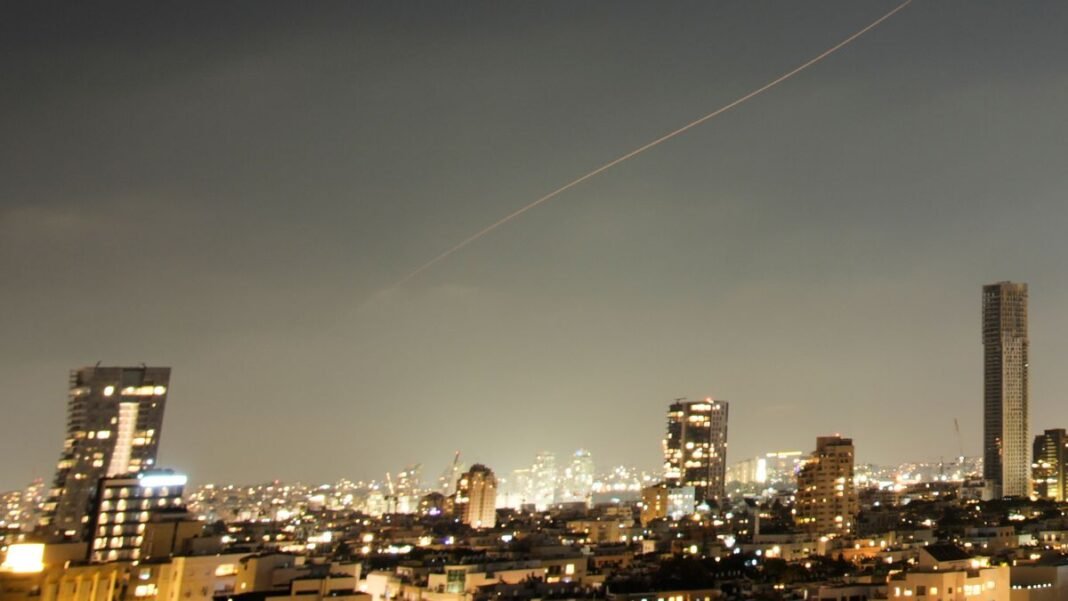
An escalation of missile confrontations between Iran and Israel has sparked a new cycle of violence in the Middle East, creating a challenging situation to de-escalate. Despite US President Donald Trump’s advice to refrain from responding to Iran’s initial ballistic missile attacks, Israel proceeded with airstrikes on western and central Iran following an attack on its northern borders, marking the first significant military actions in two months.
Israeli fighter jets conducted airstrikes on Iran’s defense systems, prompting Tehran to issue warnings of potential retaliation, particularly targeting Israeli strikes in Lebanon. Trump’s dismissal of warnings regarding Lebanon’s significance in the conflict has complicated the situation, as the focus remains on the conflict with Iran.
The core mistake in this scenario lies in Trump’s decision to engage in a joint military operation with Israel without considering Lebanon. Both countries aimed at objectives such as regime change, dismantling Iran’s nuclear program, and weakening Tehran’s military capabilities, yet none of these goals have materialized, leading to diverging interests now.
The involvement of Hezbollah in the conflict is crucial due to its focus on threatening Israel, compelling Netanyahu to take actions against the group. Tehran has insisted on including a resolution for Lebanon in any potential peace deal with the US, involving the reopening of the Strait of Hormuz.
As tensions escalate, Trump seeks a solution to reopen the Strait of Hormuz, which significantly impacts the global economy. The recent strikes have disrupted peace talks, prompting a critical decision regarding Lebanon’s future, which could lead to either a full-scale war involving Iran and Hezbollah, or a compromise to de-escalate the situation.
The strained relationship between Trump and Netanyahu, coupled with Iran’s military capabilities, has created a volatile environment with no easy resolution in sight. Trump’s erratic communication on social media only exacerbates the conflict, empowering Tehran’s hardline stance.
While acknowledging Iran’s controversial actions, the situation demands careful handling to prevent further escalation. The current US approach of threats and military maneuvers appears ineffective, risking the region’s stability and contradicting Trump’s vision of a peaceful Middle East.