In Gaza City, members of the Al-Drimli family are using basic tools like shovels, buckets, and a wheelbarrow to search for the remains of their friend and neighbor in the debris of their former residence. Despite the scorching midday sun on Monday, the men quietly labor, shielded by orange towels or sweatshirt hoods, as the sounds of shovels clanging and electric saws buzzing fill the air.
Their modest efforts with the wheelbarrow barely make a dent in the extensive wreckage left by an airstrike in November 2023 on the six-story building. The family, having already retrieved the remains of their own loved ones, is now focused on locating a neighbor who was staying with them during the strike.
The ongoing scarcity of excavators in Gaza has forced many Palestinians, including the Al-Drimli family, to resort to manual labor due to the high costs and limited availability of heavy equipment. According to the Gaza Health Ministry, an estimated 8,000 to 10,000 bodies remain buried under rubble nearly three years after the conflict between Israel and Hamas began.
Ayman Al-Drimli explained to CBC News freelancer Mohamed El Saife that they rely on manual tools due to the exorbitant costs and scarcity of equipment. Officials and equipment operators in Gaza confirm that only a few poorly functioning excavators are currently operational in the region, with maintenance challenges exacerbated by a lack of spare parts, oil, and fuel.
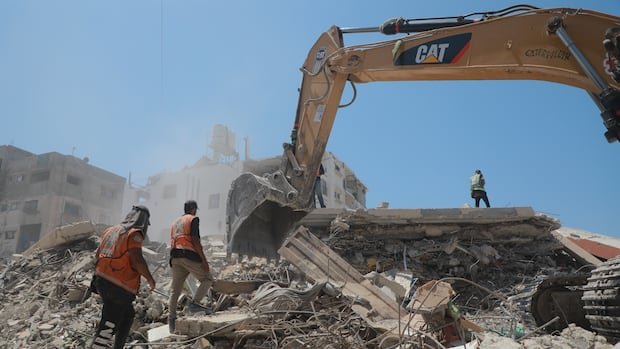
Samir Sabra, along with his son Uday Sabra, operate two of the limited number of functioning excavators in Gaza. Samir highlighted the significant costs associated with running the equipment and emphasized the dire need for maintenance and spare parts, which are currently in short supply.
Uday Sabra, working tirelessly at a site in Gaza City with the Palestinian Civil Defence, expressed the overwhelming demand for their services and the inadequacy of available equipment to handle the extensive search and recovery operations. Despite their best efforts, the scale of destruction in Gaza necessitates more equipment and resources to expedite the process.
Mahmoud Basal, the spokesperson for the Palestinian Civil Defence, pointed out that heavy machinery in Gaza was deliberately targeted during the conflict, severely limiting the capacity for recovery efforts. While efforts have been made to collaborate with international organizations like the Red Cross, the scarcity of heavy equipment continues to impede progress in clearing debris and retrieving remains.
Border restrictions and limitations imposed by Israeli authorities on essential supplies like fuel, oil, and spare parts further compound the challenges faced by humanitarian organizations and local operators in Gaza. The ongoing restrictions hinder the maintenance and operation of critical machinery, prolonging the arduous task of recovering bodies trapped under the rubble.
Despite ceasefire agreements and international calls for increased access to heavy equipment in Gaza, little progress has been made on the ground. The situation remains dire, with Basal warning of prolonged efforts required to address the extensive destruction and recover the bodies buried beneath the debris.
In response to inquiries, the Israeli Defence Forces (IDF) cited security concerns as the basis for restrictions on heavy equipment entry into Gaza, emphasizing compliance with international legal obligations and political directives. While fuel deliveries are permitted under the auspices of international organizations, the challenges of accessing essential resources persist.
Uday Sabra continues his painstaking work in Gaza City, determined to provide closure to families by recovering the remains of the deceased. Despite the obstacles and limitations, he remains committed to the task, striving to bring solace to those affected by the enduring aftermath of conflict in the region.