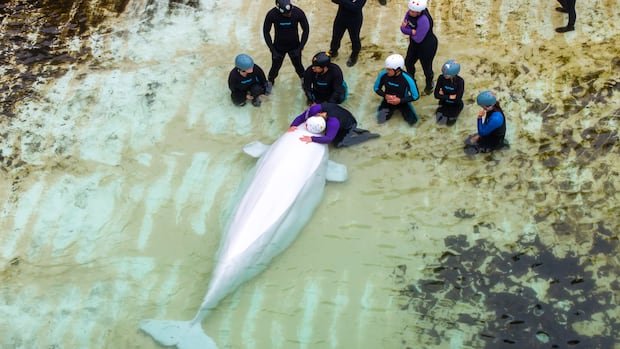
Over the summer, Marineland relocated its remaining captive whales and dolphins to five different destinations following the 2019 federal ban on keeping captive whales in Canada. The Ontario theme park, which is no longer operational, transferred 30 belugas and four dolphins to facilities in the U.S. and Spain in the largest-ever transfer of these animals.
Unfortunately, four belugas and one dolphin have passed away since the transfers began. The most recent death occurred on Sept. 24 at the Oceanogràfic de València in Spain, raising concerns about the impact of the relocations on the animals’ health and well-being.
Echo, a blind Black Sea bottlenose dolphin estimated to be 30 years old, was transported to Oceanogràfic on a 19-hour journey from the closed Niagara Falls, Ont., tourist attraction. The facility reported that Echo had severe vision issues and other medical conditions requiring specialized care, but his health deteriorated rapidly, leading to his passing.
Transporting belugas is inherently stressful for these marine mammals, according to Naomi Rose, a senior scientist at the Animal Welfare Institute. She emphasized that despite established transportation procedures, the process is highly stressful for cetaceans like belugas.
Psychological stress can have a direct impact on physiological stress, as noted by Valeria Vergara, a senior scientist at the Raincoast Conservation Foundation. She highlighted that elevated stress hormones can suppress appetite in marine mammals.
Recent deaths of belugas and dolphins that were relocated to the Oceanogràfic facility have raised questions about the relocation process and the well-being of the animals. Necropsies and examinations are being conducted to determine the cause of these deaths.
Facilities like the Shedd Aquarium in Chicago and SeaWorld in Texas and California have taken in some of the relocated belugas from Marineland. While there have been unfortunate deaths among the belugas at these facilities, efforts are being made to monitor and care for the remaining animals.
Experts have expressed concerns about the stress and challenges faced by belugas during transport and adaptation to new environments. The well-being of the relocated belugas remains a focus of ongoing monitoring and care efforts by the facilities hosting them.
Despite the tragic outcomes for some of the relocated animals, the decision to move them from Marineland was deemed necessary due to the park’s closure and inability to provide proper care for the whales. Vigilance and further investigations are ongoing to ensure the safety and well-being of the remaining belugas in their new environments.