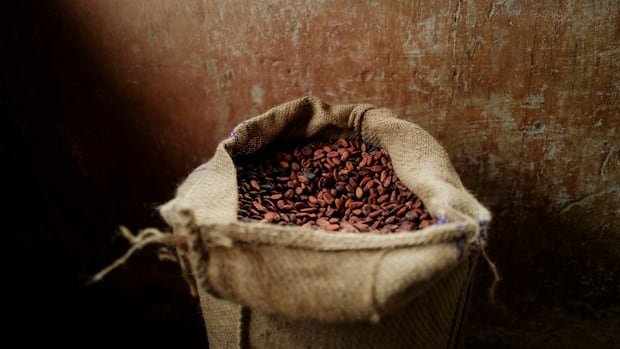
A recent peer-reviewed study highlights a lesser-known risk facing cocoa production amidst the hype of Halloween chocolate displays nationwide. The research, led by Anna Lea Albright during her tenure as an environmental fellow at Harvard University, stresses that heavy rainfall poses a more significant threat to cocoa crops than commonly acknowledged climate factors like heat and drought.
In the past few years, cocoa prices have surged, with a tonne now priced at around $6,000 US compared to the previous range of $2,000 to $3,000 US per tonne since 2014. In 2024, prices skyrocketed to over $12,000 US due to various factors, including severe flooding in West Africa, the world’s leading cocoa-growing region supported by over two million farmers.
Leslie Agyare, the founder of Three Mountains Cocoa, working with numerous farmers in Ghana, expressed the challenges posed by excessive rainfall this year. Climate change, fueled by human activities such as burning fossil fuels, is projected to exacerbate extreme rainfall events, impacting the beloved cocoa crop enjoyed by billions globally.
The study, recently published in the Proceedings of the National Academy of Sciences, concentrated on Ghana, the world’s second-largest cocoa producer. Analysis revealed that excessive rainfall during flowering significantly restricts cocoa yields, surpassing the impact of temperature during these crucial months. While cocoa trees require moisture during the wet season, excessive rainfall can harm delicate flowers and young pods.
Moreover, wet conditions increase the risk of fungal infections, such as black pod disease, which spreads through rain splashes. The study identified a clear climate change signal, with warmer air holding more moisture and intensifying heavy rain events during the wet season.
Notably, El Niño patterns in West Africa typically reduce extreme rainfall risks but elevate drought probabilities, further complicating the region’s agricultural landscape. The study underscores the multifaceted challenges facing cocoa production, including aging trees and non-climactic risks like illegal gold mining, as highlighted by the UN Food and Agriculture Organization.
Despite the identified risks, experts emphasize the need for interventions to mitigate the impact of extreme rainfall on cocoa production, such as fungicide application and improved drainage systems. Addressing infrastructure shortcomings and implementing efficient post-harvest practices could enhance resilience in cocoa farming communities, reducing vulnerability to price fluctuations and potential shifts towards cocoa-free chocolate alternatives.