Parts of British Columbia are facing severe drought conditions this summer. In Bessette Creek, water use restrictions were implemented to protect salmon populations from low water levels. Temporary protection orders for the Salmon River watershed were also issued and rescinded due to increased wildfire risk, then reissued later.
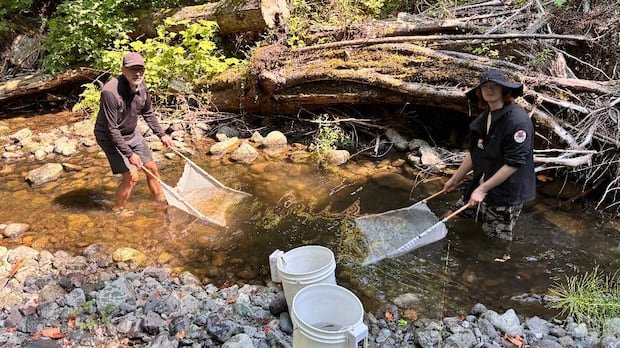
Bob Crandall, treasurer of the Cowichan Lake Salmonid Enhancement Society, mentioned that streams connected to Lake Cowichan are drying up annually. The society conducts fry salvage, manually rescuing fish from drying rivers and relocating them to other water bodies to mitigate the impact of ecosystem challenges caused by human activities.
While local communities support these interventions, scientists caution that such measures have limitations and may not offer a sustainable long-term solution. Climate change is making fish relocation efforts more challenging, with streams drying up farther upstream. The process involves using aerators and nets to transport fish, posing difficulties, especially in hot weather.
Collaborating with the Ts’uubaa-asatx Nation and volunteers, Crandall works to move various fish species to areas with better water conditions. The Nation plays a crucial role in the fry salvage operations, employing drones to monitor drying streams. Michelle Corfield emphasized the importance of salmon conservation to the community and highlighted the Nation’s commitment to preserving salmon for future generations.
In France, similar rescue efforts are facing obstacles due to severe drought and extreme heat events. Jean-Pierre Faure highlighted the challenges faced by the Fédération de Pêche du Rhône in relocating fish, as changing weather patterns are straining traditional management approaches. The focus should shift towards ecosystem restoration and efficient water management rather than solely relying on relocation efforts, which can be costly and stressful for the fish.
Efforts to safeguard fish populations during droughts are crucial, but experts suggest that sustainable ecosystem management is key to addressing long-term challenges posed by climate change.