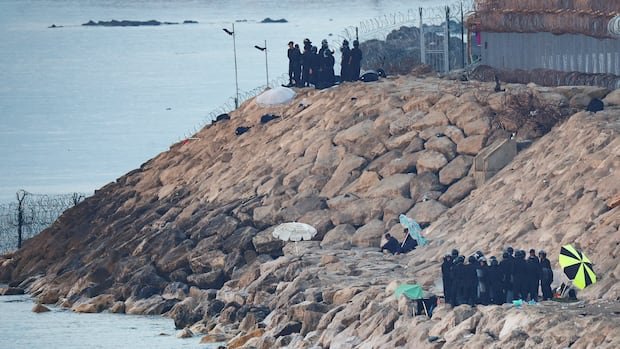
Moroccan authorities apprehended over 100 individuals on Saturday as they attempted to enter the Spanish enclave of Ceuta, amid heightened security following online calls for another mass migrant influx. The incident occurred two weeks after a surge of 72,000 migrants entered Ceuta, causing EU discord and fueling anti-immigrant sentiments globally, with 96 fatalities reported during the crossing.
The detainees, including 109 migrants from sub-Saharan Africa and two Moroccan nationals, were taken into custody in or around Fnideq, a Moroccan city opposite Ceuta, according to a source from Morocco’s Interior Ministry. Reports from Spanish news agency EFE indicated that Moroccan police deployed tear gas to disperse migrant groups near the border, with a significant police presence observed in the vicinity.
In Ceuta, Spanish military personnel guarded supermarkets while police maintained a strong presence on the city’s streets, which were notably calmer following the recent border turmoil. Madrid reinforced security by installing a maritime barrier and deploying over 500 additional police officers from mainland Spain, bringing the total number of security personnel in Ceuta to over 1,600. The Interior Ministry affirmed that these reinforcements would remain until normality was restored.
Interior Minister Fernando Grande-Marlaska emphasized the government’s commitment to preventing future incidents like the one on July 30, reiterating that irregular migrants would not be permitted to remain in Ceuta, travel to mainland Spain, or obtain legal status, except in exceptional cases of extreme vulnerability. The minister stated that those lacking the right to stay would be repatriated to Morocco.
Amid concerns of a potential mass crossing on August 15, Rabat warned that it would prosecute individuals involved in organizing or participating in such events. Security measures were reportedly intensified near the border, with police checkpoints and patrols in place, while efforts were made to prevent migrants from reaching northern Morocco through various means.
Young migrants who had entered Ceuta recently advised against further attempts to cross, highlighting the risks and hardships involved. Adil Jamil, 17, cautioned that continued crossings would not lead to solutions, urging restraint and a focus on long-term prospects rather than immediate risks.