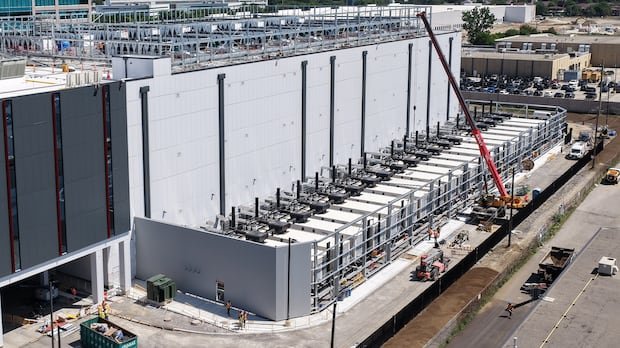
Ontario Premier Doug Ford unveiled the province’s fresh data center framework on Thursday, emphasizing the importance of keeping Canadians’ data within Canada. The framework is built upon three main pillars: economic development, data protection and sovereignty, and community investment along with public confidence.
During the announcement in Guelph, Ford highlighted the significance of the new data center playbook in shaping the future economy. He emphasized the potential for billions in economic growth, increased tax revenues, and the creation of numerous job opportunities while ensuring that data centers comply with regulations.
Under the framework, data centers will be required to cover the full cost of their electricity consumption, incentivizing projects to develop their own power generation. Moreover, the framework introduces a distinct rate class for large new data centers, setting rates higher than existing industrial programs for major electricity users, with no additional costs passed on to Ontario families.
Ford reiterated that the province will not provide financial incentives to attract investments. The framework is positioned as a vital component of Ontario’s artificial intelligence (AI) strategy, projected to yield substantial economic growth and the annual creation of 17,000 new jobs by 2035.
Meanwhile, concerns have arisen in various municipalities across the province regarding data centers, with Oakville recently voting for a one-year moratorium and Mississauga set to vote on a similar measure in September.
Green Party of Ontario leader Mike Schreiner has called for a halt on new data centers, expressing concerns over the environmental impact and community benefit. He stressed the need for stringent regulations, particularly regarding water usage, in data center operations.
Ontario Minister of Economic Development Vic Fedeli emphasized the importance of prioritizing data centers that implement closed-loop water systems to reduce water consumption. Ford echoed this sentiment, emphasizing the government’s focus on supporting builds with sustainable water usage practices.
Schreiner criticized the new playbook, stating that it lacks specific regulations and details to ensure environmental protections. He emphasized the need for communities to have control over data center development to prevent undue influence from tech corporations.
Looking ahead, Waterloo region is assessing the local impacts of data centers, with Coun. Colleen James proposing an information report to educate officials on the economic and environmental implications of data center expansions. The report is slated for completion early next year.