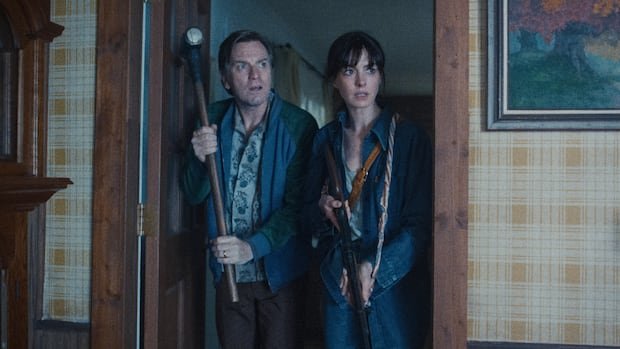
In 1982, housewives had various concerns, such as their children’s interactions, family dynamics, and unusual occurrences like dinosaur sightings. Oak Street, as depicted in the film “The End of Oak Street,” follows the story of Denise, a housewife, and her family facing challenges when their neighborhood is mysteriously transported back to the late Jurassic period. The family, including father Greg, sister Audrey, and brother Brian, navigates through this unexpected journey reminiscent of Spielberg’s storytelling style.
While the film captures a Spielbergian vibe and offers nostalgic 80s sentiments, it falls short of delivering a truly impactful narrative. Despite being hailed as a summer blockbuster, “The End of Oak Street” lacks the depth and artistic intent seen in classic Spielberg films. The movie, although entertaining at times, struggles to develop its characters and relies heavily on dinosaur encounters for excitement.
As the family deals with personal secrets and survival instincts amidst dinosaur attacks, the film fails to provide substantial character growth or meaningful storytelling. The repetitive action sequences and lack of character depth make the dinosaur encounters less engaging over time. While the movie pays homage to Spielberg’s aesthetics, it lacks the substance and resonance of his iconic works.
Overall, “The End of Oak Street” may appeal to audiences seeking a spectacle-driven experience, but it falls short in delivering a coherent and compelling narrative. Despite its visual appeal and nostalgic nods to Spielberg’s style, the film ultimately misses the mark in creating a truly impactful cinematic experience.