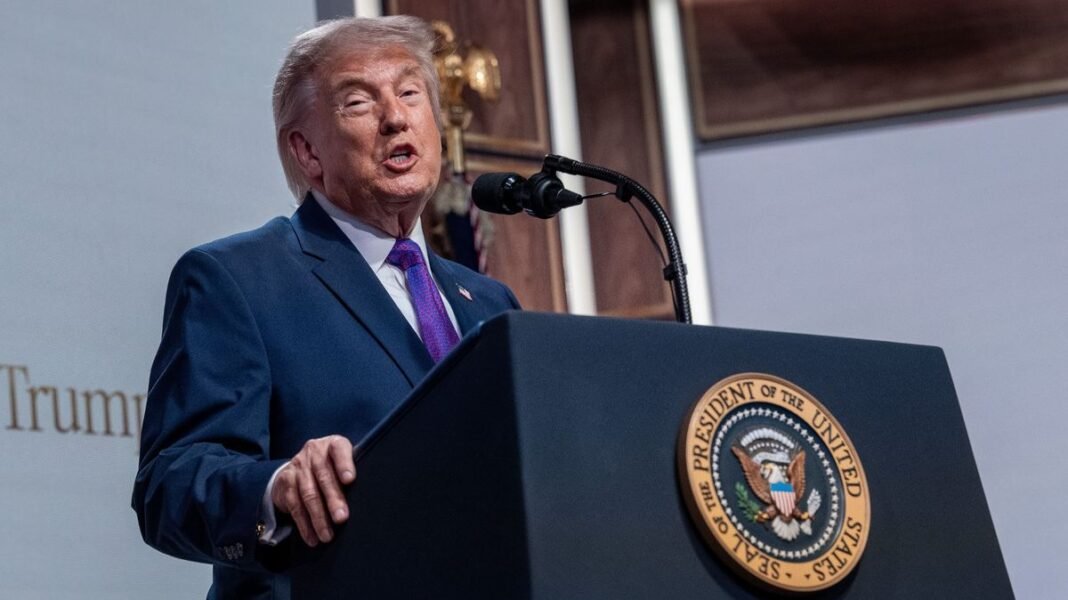
President Donald Trump is expected to inform NATO allies about the United States’ planned reduction in military support during significant crises, according to insider sources. The U.S. intends to decrease the pool of military capabilities available to European nations within the alliance, as reported by Reuters.
The NATO Force Model, a framework where member states designate forces that could be activated in a major crisis like a military attack on a NATO member, is set to undergo changes. Sources indicate that the Pentagon will scale back America’s commitment significantly, a move aligned with Trump’s push for European countries to assume greater responsibility for their security.
Elbridge Colby, the Pentagon’s policy chief, has affirmed that the U.S. will continue using nuclear weapons to safeguard NATO members while European allies gradually take the lead on conventional forces. The Pentagon is expected to announce this shift in commitment at a Friday meeting of defense policy chiefs in Brussels, with Alex Velez-Green likely representing the U.S.
The upcoming NATO leaders’ summit in Turkey in July will see a focus on adjusting the NATO Force Model, a priority for Colby’s team. Amid concerns that the U.S. may withdraw support, tensions within the NATO alliance have heightened, especially following recent announcements of troop reductions and canceled deployments.
Capitol Hill aides are reportedly monitoring and expressing concerns over the Pentagon’s plans to narrow its commitments within the NATO Force Model. Despite these developments, a senior NATO diplomat remains optimistic that the U.S. would still assist Europe in times of need.
Trump and his administration have criticized European allies for insufficient military spending and reliance on U.S. defense support, emphasizing the presence of American troops in Europe. Additionally, Trump’s controversial interests, such as acquiring Greenland and disputes with German Chancellor Friedrich Merz, have strained transatlantic relations.
European allies argue that they are enhancing their military capabilities swiftly but acknowledge that such efforts require time. The ongoing dynamics between the U.S. and its NATO partners underscore evolving security arrangements and responsibilities.