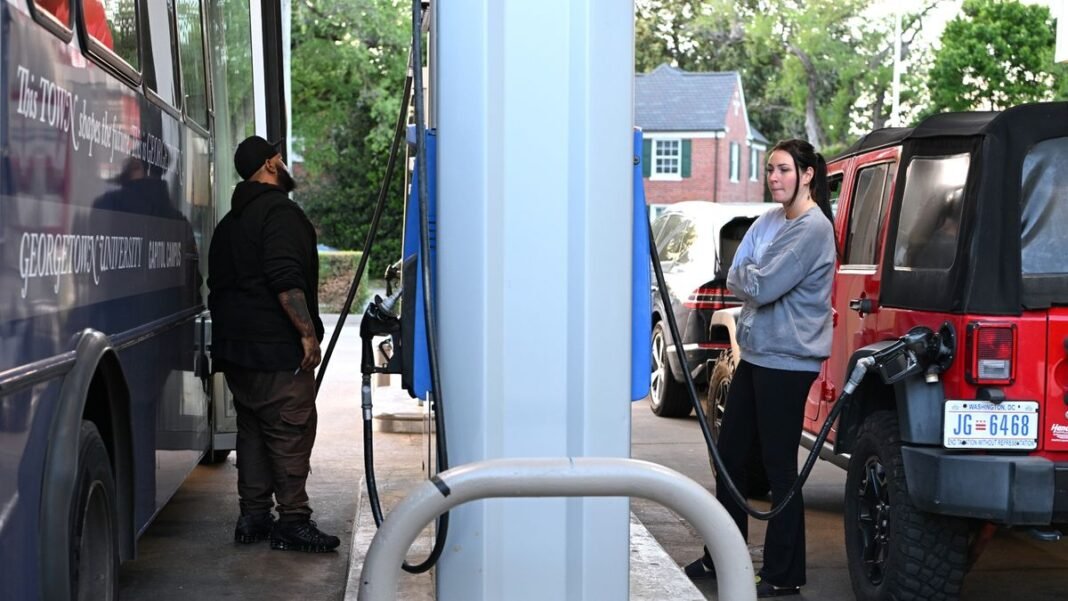
Motorists in the United States are facing higher increases in gas prices due to the Iran conflict compared to drivers in the United Kingdom, recent data reveals. According to JPMorgan, American drivers are now paying 42% more for gasoline since the conflict began on February 28, while British drivers have experienced a more moderate 19% increase.
Similar price hikes have been observed in other G7 countries, with Canada seeing a 24% increase in petrol prices and France at 18%. In the US, diesel prices have surged by an alarming 48%, surpassing all other developed nations.
The escalating gas prices come at a time when President Donald Trump’s approval ratings have plummeted to a record low of 36% amid concerns over the economic impact of the Iran conflict. Trump, who is campaigning for re-election in 2024 on an anti-inflation platform, has reassured voters that gas prices will drop rapidly once the war concludes.
Despite a temporary ceasefire, negotiations to reopen the crucial Strait of Hormuz oil route have hit a roadblock, with Iran warning of a potential resumption of hostilities if the US maintains its stringent demands. Meanwhile, in the UK, consumers are adjusting their spending habits in response to the Iran conflict, cutting back on car trips and dining out.
Recent data from NatWest indicates a decrease of 10-20% in fuel purchases compared to the previous year, especially among older individuals, suggesting fewer driving trips. Additionally, spending on dining out has dropped by approximately 3.5%, with more customers seeking value for money amidst economic uncertainties.