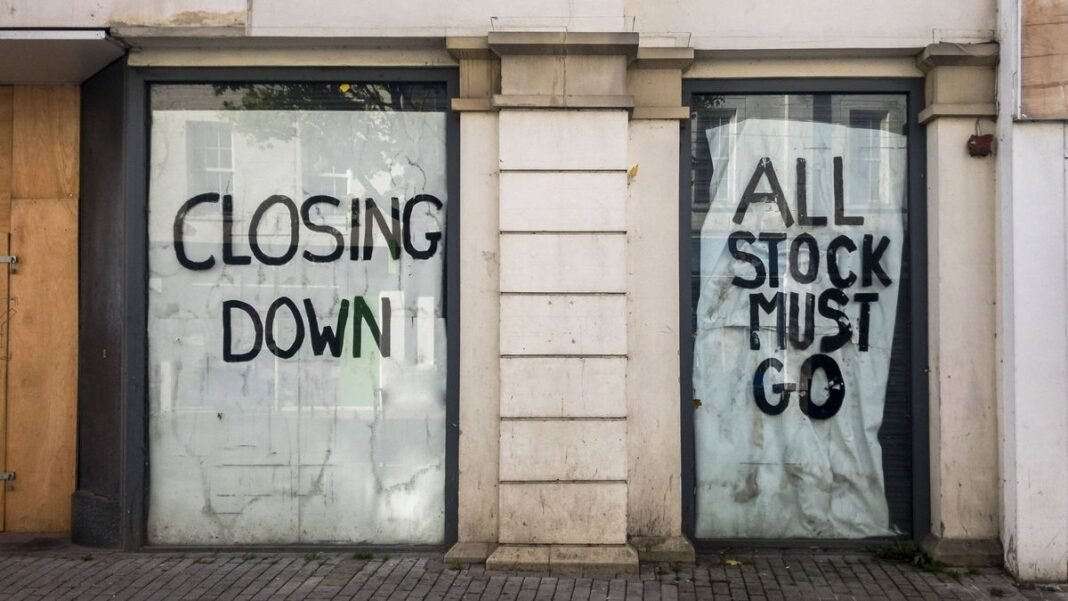
In the last ten years, over 120,000 shops have shuttered their doors in the United Kingdom, according to a recent report. The closure trend extends beyond shops, with nearly 6,600 bank branches also disappearing between 2016 and 2025, as highlighted by research conducted by Parcelhero, a package price comparison website.
Parcelhero’s latest assessment of the high street, following a previous study four years ago, reveals a significant increase in store closures. The initial forecast of around 100,000 store closures by 2030 has already been surpassed, with an estimated 122,682 physical stores shutting down between 2016 and 2025.
Notable closures include well-known retailers like Jaeger, Toys R Us, Maplin, Mothercare, Thomas Cook, Debenhams, Laura Ashley, Paperchase, Homebase, Ted Baker, and Oddbins. The report also points out a concerning decline in department stores, with 83% of those existing in 2016 no longer in operation, leaving prominent vacancies on many high streets.
The aftermath of Debenhams’ collapse five years ago is still evident, with several of its former branches remaining vacant or boarded up, some even attracting criminal activities. David Jinks, head of consumer research at Parcelhero, expressed disappointment in the failure of department stores to adapt to the digital era, attributing their downfall to rising costs and fierce online competition.
The COVID-19 pandemic further exacerbated the challenges faced by many stores, leading to permanent closures for some. The report highlights the shrinking presence of iconic brands like House of Fraser and Sir Philip Green’s Arcadia empire, which included Topshop, Burton, and Dorothy Perkins stores.
The warning in the report is clear – the battle of high street closures is far from over. TG Jones, the rebranded version of WH Smith, is the latest retailer facing difficulties, with plans to close a significant number of stores, potentially resulting in thousands of job losses. Additionally, Morrisons is set to shut down 100 stores in the near future, citing government policies as a contributing factor to increased costs and restructuring efforts within the supermarket chain.