In the heart of Minneapolis on Lake Street, I witnessed the disintegration of America unfold before my eyes. Police vehicles set ablaze, helicopters circling overhead, and city blocks reduced to ruins. Crowds gathered amidst the wreckage, questioning how things could deteriorate so rapidly.
Reflecting on the response to the tragic killing of Henry Nowak six years later, concerns arise that similar historical patterns may be emerging in the UK. Having observed the consequences of such politics during my time in America, where genuine public outrage and sorrow were manipulated into something more sinister, it is troubling to see echoes of this playbook being adopted in the UK.
At the epicenter of the chaos in Minneapolis was the brutal death of George Floyd, a Black man pinned down by a white police officer’s knee while pleading for breath – a haunting parallel to Henry’s final moments.
The ensuing uproar in America was visceral, fueled by deep-seated grievances and anguish. Decades of strained relations between Black communities and law enforcement erupted in a catastrophic display of unrest.
What transpired was more than a mere demonstration; it transformed into a darker spectacle. Extremists, political opportunists, and online provocateurs seized upon the tragedy, hijacking peaceful protests led by grieving individuals seeking justice. These malevolent actors cared little for George Floyd himself.
From violent far-right extremists to opportunistic politicians and online instigators reveling in chaos, their motives were clear – to stoke division and anger, the very currency that sustains the far right in the UK.
The UK has already witnessed the repercussions of such turmoil. Following the tragic murders of three young girls in Southport in 2024, violent outbursts engulfed cities across Britain, with mobs rampaging through streets, attacking law enforcement, targeting asylum seekers’ accommodations, and spreading falsehoods at an alarming pace.
Tragedy morphed into political kindling, and public sorrow became a tool for manipulation. Instead of calming tensions, some individuals exacerbated the situation, fueling the flames of discord once more.
Nigel Farage opted to exploit Henry’s murder for his own political agenda, transforming it into a spectacle of cultural division. Shortly after Henry’s killer received a lengthy prison sentence, Farage urged for a response of “pure cold rage,” inciting a volatile reaction in Southampton, the site of the tragedy.
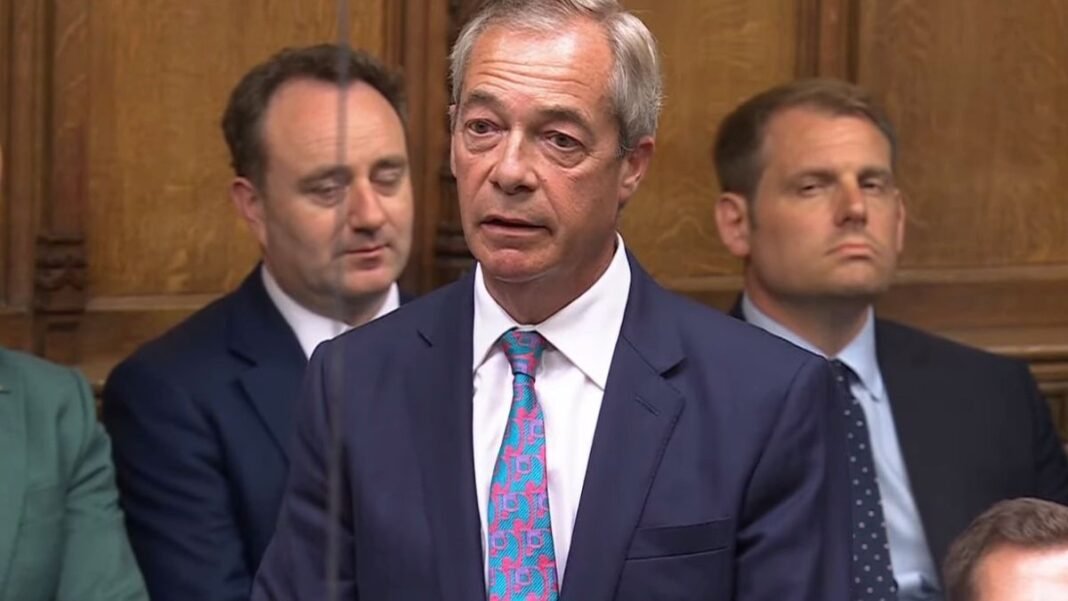
Today, during Prime Minister’s Questions, Farage insinuated that Henry’s death exposed a supposed “two-tier culture,” insinuating that white rights were undervalued compared to those of ethnic minorities.
Farage’s actions drew rightful criticism from Sir Keir Starmer, who emphasized that using Henry’s death to sow discord and animosity was reprehensible, especially when the family explicitly implored against such exploitation.
Henry was not a symbol of racial conflict but a human being. Attempting to mold his tragic demise into a national racial conspiracy dishonors his memory, exploiting his loss for political gain.
Farage was elected to serve the nation, not to perpetuate grievances for personal gain. The country needs less theatrics and more sincerity, less showmanship and more dedication to public welfare.
The essence of this tragic episode is straightforward – a violent individual, armed with a knife, took a young life. The responsibility lies solely with the perpetrator, not an entire community, religion, or imagined conspiracy.
Similarly, the mishandling of the situation by the police underscores institutional failures – not evidence of systemic racism against white individuals, but a failure of judgment, policing standards, and common sense.
The true scandal here lies in the breakdown of proper procedures and accountability. Let us acknowledge these facts and address them honestly, without deflecting blame onto broader societal issues.
Minneapolis’ turmoil serves as a cautionary tale, a stark reminder of the dangers of nurturing resentment and division unchecked. The UK must heed this warning and strive for a more united and compassionate society, one where tragedies like Henry’s are met with empathy, not exploitation.