Donald Trump traveled to Beijing this week under the impression of being the most influential individual globally. Upon arrival, his demeanor resembled that of someone who had just won a contest to meet their favorite music group.
Not too long ago, the leader commonly referred to as “the leader of the free world” was vocal about his strong opinions regarding China. He accused them of exploiting America, taking away jobs, and mocking its leaders. He promised significant actions to rectify the situation, boasting about imposing substantial tariffs and applying immense pressure to make Beijing plead for mercy.
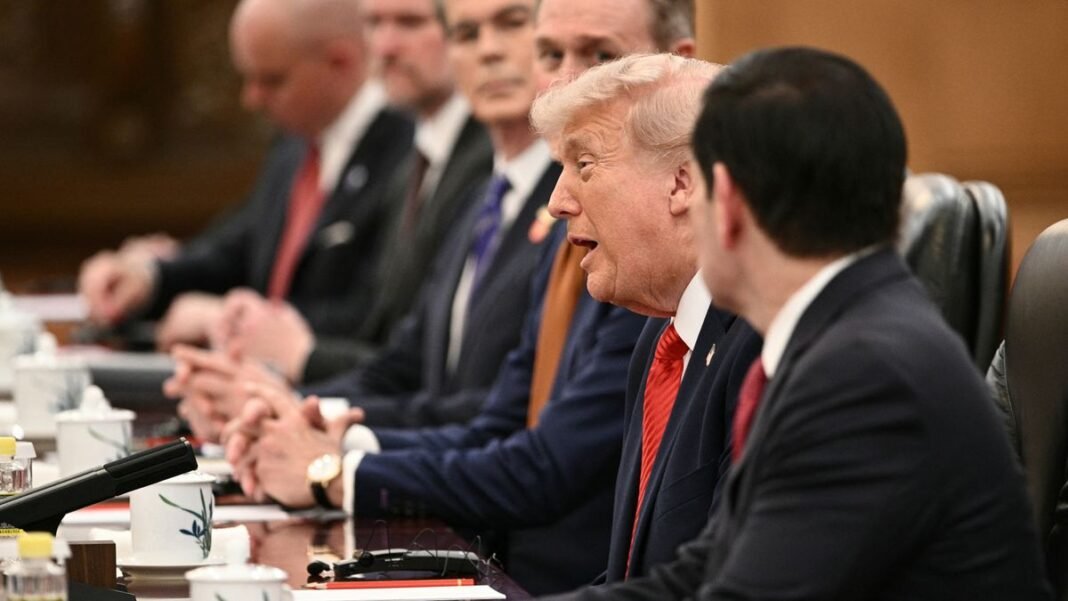
Fast forward to the present, the same individual who spent years demonizing China to American workers and initiated a trade war causing economic turmoil, found himself in Beijing praising their leader and emphasizing the significant presence of top global businessmen as a gesture of respect towards China.
The once assertive figure determined to challenge the world had suddenly transformed into a diplomatic equivalent of a puppy exploring a new garden within a single introductory statement.
To his credit, Trump did not arrive empty-handed but carried the aftermath of a conflict in the Middle East that obstructed global energy supplies, compelling him to seek Chinese assistance in resolving a crisis of his own creation.
When one initiates a conflict, fails to resolve it, and relies on a major rival for help, a certain degree of flattery becomes inevitable.
However, there exists a distinction between diplomatic courtesy during challenging negotiations and flying to Beijing with the most influential American CEOs to pay homage, as Trump described it in his own words.
Napoleon, Caesar, and even Churchill did not engage in such acts of deference. The supposed art of negotiation seemed more akin to groveling when the balance of power favored the other party. While Xi and the esteemed businessmen understood this dynamic, the only oblivious individual was the one lavishing everyone with compliments in the room.