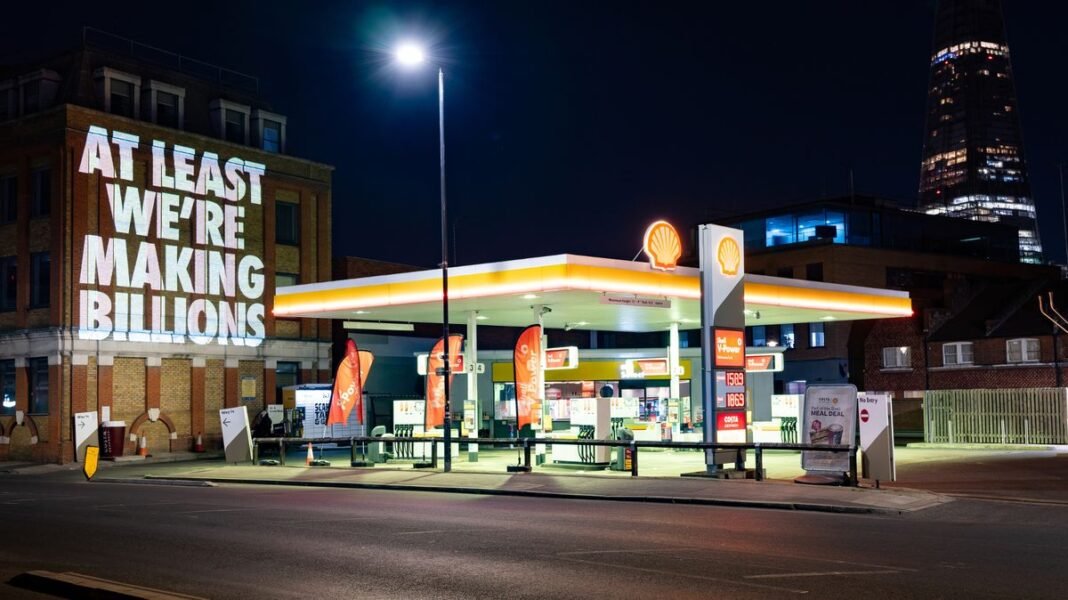
Oil company Shell has faced criticism for generating substantial profits of almost £5.1 billion in the first quarter of this year attributed to the ongoing conflict in Iran. The surge in wholesale oil and gas prices benefited Shell and other industry players, resulting in profits more than double the previous quarter and higher than the same period last year. Despite a 4% decline in oil and gas production due to disruptions from the US-Israeli conflict with Iran, including damage at its Qatari gas plant, Shell’s financial performance remained strong.
While Shell and its counterparts thrive financially, ordinary households are grappling with rising petrol prices and the looming prospect of increased energy and food costs, contributing to inflation and economic challenges. Shell’s stock prices have experienced a decrease post-March but remain elevated compared to pre-conflict levels in late February.
Following Equinor’s disclosure of nearly £7 billion in profits for the first quarter, and BP’s announcement of over £2.4 billion in profits during the same period driven by surging oil prices, Shell’s financial results align with industry trends. Shell’s CEO, Wael Sawan, saw a significant increase in his company shares’ value amidst the conflict, with additional shares acquired through a reward scheme.
Environmental activists from Greenpeace protested at Shell’s London headquarters and a nearby petrol station ahead of the financial results release. Sawan acknowledged the company’s resilient performance amid global energy market disruptions, emphasizing operational excellence. Shell also declared a 5% dividend increase and a £2.2 billion share repurchase plan over the next three months, further benefiting investors.
Critics, including the End Fuel Poverty Coalition coordinator Simon Francis, highlighted the disparity between energy companies’ profits and the financial strain on households. Suggestions were made to address energy bill challenges by decoupling electricity prices from gas markets, promoting home insulation, and taxing crisis-induced profits for better societal support. Greenpeace and Friends of the Earth representatives criticized Shell and other fossil fuel giants for prioritizing profits over consumer welfare amid escalating energy costs.
Oil prices hovered around $101 per barrel, showing a slight decrease amid peace talk hopes between the US and Iran. However, prices remain significantly elevated compared to pre-conflict levels in February. Shell attributed its profit surge to seasonal factors and tax payments, underscoring the importance of dividends to shareholders, a substantial portion of which are UK-based.
The ongoing financial success of energy corporations amidst geopolitical turmoil and consumer challenges underscores the complex dynamics of the energy market and the need for sustainable and equitable solutions to address the energy crisis.